

How to use this page: Bali DMC Agency is an independent buyer’s guide to Bali MICE — we are not a DMC, PCO, venue, or transport operator ourselves. A DMC manages on-the-ground logistics, venues, and transport; it is not the venue or the conference organiser. Capacities, group sizes, and budgets shown are indicative ranges flagged [VERIFY] (mid-2026) and must be confirmed in writing with the relevant supplier, venue, or broker before you commit — this is general information, not legal, tax, or procurement advice; confirm delegate visas and event permits with the appropriate authority or your notary as relevant. We may earn a referral commission when we connect you to a vetted partner, which never changes the price you are quoted.
Bali vs Singapore for MICE is not a question of which destination is objectively better — it is a question of what your program is actually trying to achieve. Singapore leads Asia-Pacific in international association-meeting volume, with the air lift, convention-grade infrastructure, and regulatory efficiency to handle the largest and most complex congresses on the calendar. Bali sits roughly 10th among Asia-Pacific cities in the ICCA 2023 rankings [sourced via TTGmice and Mix Meetings reporting ICCA data; relative positions consistent across sources, though absolute meeting counts differ between outlets] and offers something Singapore cannot replicate: a single destination that combines mid-size convention space, a high density of resort incentive experiences, and cultural programming that makes delegates want to extend the trip. Neither is the right default. The choice is made by the brief.
This content is general information for planning and destination-selection purposes. It does not constitute financial, legal or professional advice. Cost comparisons are directional illustrations, not verified benchmarks. Verify all figures, visa requirements and regulatory conditions with primary sources before committing budget or making bookings. The editorial head-to-head comparisons in this guide are synthesis based on public data and industry knowledge; they are not contained in or derived directly from ICCA source data.
The ICCA Rankings Context: Where Each Destination Actually Stands
Before comparing Bali with Singapore, Phuket, Bangkok, and Kuala Lumpur, it helps to understand what the data underlying this asia mice hub comparison actually measures — and what it does not.
The International Congress and Convention Association (ICCA) publishes annual rankings of cities and countries by the number of international association meetings they host. The 2023 data (released in 2024 and reported by TTGmice and Mix Meetings) shows the Asia-Pacific city ranking led by Singapore at number one, followed by Seoul at number two and Bangkok at number three. Kuala Lumpur also appears in the Asia-Pacific top ten. At country level, Thailand ranked 25th globally with 158 international association meetings; Singapore ranked 27th with 144; Malaysia ranked ahead of Indonesia; and Indonesia ranked 37th globally with 98 meetings. Bali ranks approximately 10th among Asia-Pacific cities [ICCA 2023 via TTGmice / Mix Meetings — relative position consistent, absolute figures carry a source-discrepancy flag: two outlets reporting the same ICCA dataset gave different absolute meeting counts for Japan and possibly others, so treat country-level totals as indicative rather than exact].
A critical framing point: ICCA measures international association meetings — rotating congresses for scientific, professional and trade bodies. It does not measure corporate incentive programs, internal leadership conferences, product launches, team-building retreats, or the private-sector MICE segments where Bali is most frequently evaluated. A destination can rank low on ICCA tables and simultaneously host thousands of high-value corporate programs each year. Bali is that destination. Singapore dominates the association segment; both compete, at very different scales, for corporate and incentive work.
One more thing the ICCA data does not contain: head-to-head cost comparisons between destinations, or verdicts on experience quality, visa ease, or air connectivity differentials. Those comparisons in this guide are editorial synthesis, not sourced from ICCA.
The Five Destinations: Snapshot Comparison
| Destination | ICCA 2023 AP Rank (City) | Primary MICE Strength | Typical Program Fit | Relative Cost Level |
|---|---|---|---|---|
| Singapore | #1 AP | Large international congresses, hybrid events, global HQ meetings | 1,000+ delegate conventions, association AGMs, tech/finance summits | High (benchmark) |
| Seoul | #2 AP | Convention infrastructure, K-culture incentive pull | Large conventions, mid-size incentives for Asian markets | High to moderate |
| Bangkok | #3 AP | Value, air lift, multi-venue city-wide conventions | Large to mid-size conventions, budget-conscious incentives | Moderate (lower than Singapore) |
| Kuala Lumpur | AP Top 10 | Strong convention centre, halal F&B, hub airport | Islamic-market conventions, regional corporate conferences | Moderate |
| Bali | ~#10 AP | Resort incentive experience, cultural program density, mid-size conventions | Incentive travel (40–500 pax), mid-size conferences, team-building | Moderate to low [on quote; varies by tier] |
| Phuket | Not in AP Top 10 | Beach resort incentive, leisure integration | Incentive travel, retreat formats, smaller conferences | Moderate [on quote] |
ICCA positions: AP = Asia-Pacific. Bali “~#10” reflects ICCA 2023 city data per TTGmice/Mix Meetings. Phuket position not independently verified in ICCA AP top 10. Cost levels are directional indications, not verified comparisons; “on quote” applies to all destinations for any specific program.
Air Connectivity and Lift: The Factor Buyers Underweight
No venue comparison survives a connectivity failure. If your delegates cannot get there on a reasonable number of connections at acceptable cost, the destination is not viable regardless of how good the ballrooms are.
Singapore: The Clear Leader on International Lift
Singapore Changi Airport is routinely rated among the best-connected airports in the world and connects the island-state to virtually every major corporate travel market on direct or single-stop routing. For events drawing delegates from North America, Europe, Middle East, South Asia, and East Asia simultaneously, Singapore is the only Asia-Pacific city where the delegate logistics genuinely simplify regardless of origin. Airlines that will not code-share or offer competitive inventory to secondary destinations typically serve Singapore well.
This matters most for large association congresses with diverse international delegate bases. For a 2,000-person medical congress drawing from 80 countries, the calculus is clear: Singapore’s connectivity is a program-risk-reducing choice. The question is whether that connectivity premium — paid in venue costs, hotel rates, and F&B pricing that benchmarks as the highest in the region — is justified by the program type.
Bangkok and Kuala Lumpur: Strong Hubs, Lower Cost
Bangkok (Suvarnabhumi, BKK) and Kuala Lumpur (KLIA/KLIA2) are both genuine regional aviation hubs with strong intra-Asian connectivity and improving intercontinental routes. For events drawing primarily from Asia, Southeast Asia, the Middle East, and South Asia, both offer a compelling combination of connectivity and cost advantage relative to Singapore. KL has a specific structural edge for events targeting Islamic-market attendees: halal F&B infrastructure at convention scale is embedded, not an add-on.
Bangkok ranks third in Asia-Pacific on ICCA 2023 city data, which reflects a combination of lift, convention space, and accumulated association-meeting track record. For a bali vs kuala lumpur conference decision, KL’s edge is the combination of the Kuala Lumpur Convention Centre (with multi-hall flexibility), the KLIA air hub, and established relationships with international PCOs who place rotating congresses.
Bali: The Constraint to Plan Around
Ngurah Rai International Airport (DPS / Denpasar) handled approximately 23.9 million passengers in 2024 — essentially at its stated nominal capacity of around 24 million, with expansion to roughly 32 million planned by 2031 [secondary/compiled data; only the H1-2024 throughput figure of 11.26 million, cited by the airport GM via Bali Discovery, is directly verified official]. The airport is well-connected to major Asian cities and to key European and Middle Eastern hubs, but the honest assessment for international MICE planners is this: delegates traveling from North America, southern Europe, or Africa are almost always making a connection, and the connection options are more limited and more expensive than equivalent routing to Singapore or Bangkok.
For incentive programs where the organizing company controls the travel arrangement — booking a charter or a group block on specific routings — this constraint is manageable. For open-registration conferences where delegates self-book from dispersed locations, it is a real friction point that will suppress registration from some markets. The airport-to-venue journey is a secondary consideration: Nusa Dua, where the BNDCC convention complex sits, is approximately 12 to 15 km from the airport, roughly 20 to 30 minutes by road via the Bali Mandara Toll in normal conditions [mapping-derived, approximate; traffic can extend this meaningfully at peak periods].
Phuket: The Regional-Draw Destination
Phuket International (HKT) is a solid destination airport for Southeast Asian and Asian-market events but carries a similar long-haul connectivity limitation to Bali, with fewer total seat offerings and a narrower range of direct routes. For bali vs phuket corporate events decisions, the connectivity comparison tends to favor Bali modestly for events drawing from diverse Asian markets, while Phuket may have marginal advantages on specific intra-SE-Asian or Gulf routings depending on timing. Both require connection planning and are best evaluated against a specific delegate origin mix.
Comparing destinations for a specific program? Connectivity, venue capacity, visa implications, and cost all interact differently depending on your headcount, delegate origins, and program objectives. Submit your brief via our enquiry form or reach the team on WhatsApp at +62 811 3942 563 and we will route you to a vetted Bali partner who can give an honest picture of where Bali fits — and where it does not. No one can pay to change what we publish; if you use our free help and proceed with a partner, they may pay us a referral fee at no extra cost to you.
Venue Inventory: Convention Scale vs Incentive Scale
This is the dimension where the bali vs singapore mice decision is most clearly differentiated — and where buyers most often mismatch their expectation to the reality.
Singapore: Convention-Grade at International Scale
Singapore’s convention infrastructure — the Sands Expo and Convention Centre at Marina Bay Sands, the Singapore EXPO, the Suntec Convention Centre — can handle congresses at a scale and with a technical specification that no Bali venue currently matches. City-wide events that require multiple venue clusters, major exhibition halls alongside plenary theatres, and simultaneous multi-track breakout capacity at 5,000+ delegate level are genuinely Singapore territory. The island-city’s compact geography also allows walking or short transfer between convention hotels and convention venues in a way that most other destinations cannot.
Bali: Purpose-Built Convention Capacity at Mid-Scale
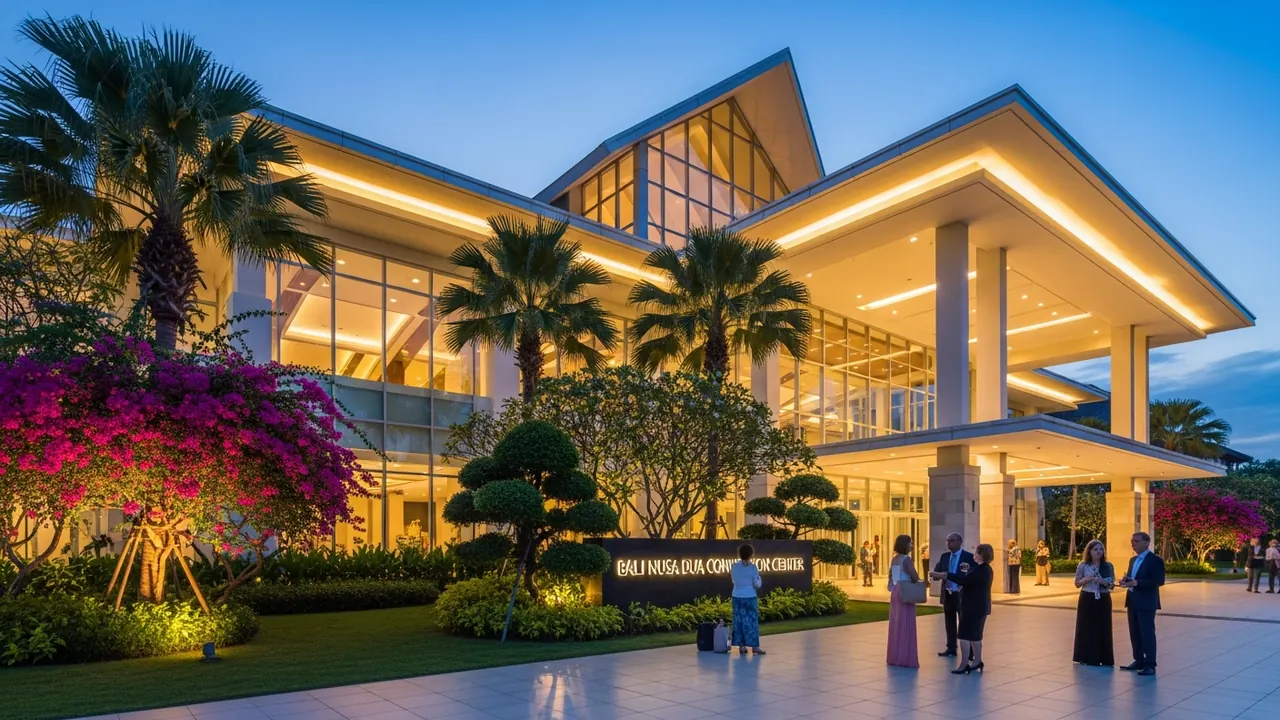
Bali’s primary convention facility is the Bali Nusa Dua Convention Center (BNDCC) in the Nusa Dua precinct, within the Nusa Dua integrated resort zone managed by ITDC. The BNDCC’s largest hall is the Nusa Dua Hall — a pillarless space of 4,400 sqm with a theatre-style capacity of up to 5,000 delegates [venue-issued and corroborated by AIPC and Meetings Show APAC sources]. The complex includes multiple function rooms described in industry listings as 44 flexible spaces [industry-listing figure, not a headline stat on the venue’s own published materials — treat as indicative]. The BNDCC complex covers two related convention buildings in Nusa Dua [supported by marketing and industry materials; individual sqm breakdown between buildings is not authoritatively published, so no specific figure is given here].
The BNDCC has hosted events that put its credentials beyond question: the G20 Leaders’ Summit in November 2022 used Nusa Dua as its primary venue hub, with plenary and key ministerial sessions held at BNDCC and the adjacent Bali International Convention Center (BICC) at the Westin. The IMF–World Bank Annual Meetings in October 2018 (8–14 October) similarly centered on Nusa Dua [both events verified via official sources]. These are not regional events; they are the types of high-security, multi-thousand delegate summits that test logistical and technical capacity. Bali passed both.
What the BNDCC does not offer is scale beyond its main hall, or the multi-cluster city-wide convention infrastructure of Singapore or Bangkok. For events requiring 10,000+ delegate capacity, multiple simultaneous exhibition halls, or the kind of urban spread that allows walking between venues, Bali is structurally limited.
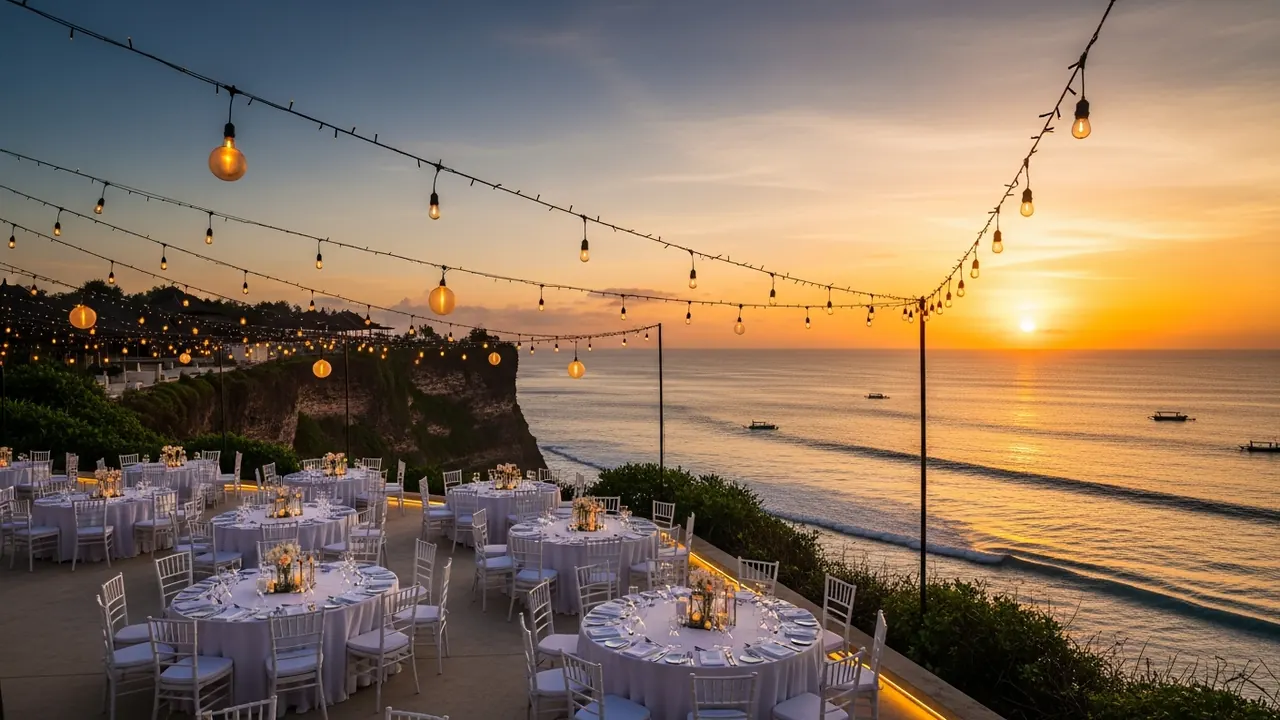
Away from the convention complex, Bali’s event-venue landscape is strongest for mid-size programs in the 20 to 1,500 delegate range. Hotel ballrooms across Nusa Dua’s resort strip provide convention-standard meeting rooms with integrated accommodation, which significantly simplifies logistics. And for gala dinners and evening events, the island’s iconic outdoor spaces — the Garuda Wisnu Kencana (GWK) Cultural Park in Ungasan, with its Lotus Pond accommodating up to 7,000 guests for standing events [multi-source benchmark; the 4,400 sqm area figure is single-source, flag for verification], and cliff and beachfront venues across the southern peninsula — offer a visual impact that Singapore’s urban-hotel alternative cannot match.
Bangkok and Kuala Lumpur: The Convention Middle Ground
Bangkok and Kuala Lumpur each have dedicated purpose-built convention centres that sit between Bali and Singapore in scale. The KLCC and QEII venues in KL offer multi-hall configurations that can handle large association events with exhibition components. Bangkok’s IMPACT Arena and BITEC (Bangkok International Trade and Exhibition Centre) provide large-format exhibition and convention space at cost levels meaningfully below Singapore. For programs that need scale beyond 3,000 delegates but face genuine budget pressure, Bangkok and KL are realistic alternatives that Bali is not, at least for the pure-convention format.
Phuket: Resort Venue for Smaller Groups
Phuket’s venue inventory is primarily resort-based: hotel ballrooms and outdoor terraces at luxury properties along the west coast, with a small number of dedicated conference facilities in the Patong and Laguna zones. The destination is well-suited to groups up to approximately 500 to 800 delegates in a resort-led format. City-scale convention capacity is not part of the Phuket offer. For bali vs phuket corporate events at the 200 to 600 delegate mark — where the program is primarily incentive or retreat in character with a conference component — the two destinations are genuinely competing on experience quality, cost, and connectivity rather than venue scale.
Cost: The Honest Picture
The “Bali is half the cost of Singapore” claim circulates widely in the MICE industry. It is a positioning statement, not a verified benchmark. The directional logic is sound — venue day rates, local labor, domestic F&B, and ground transport in Bali sit at a materially lower level than in Singapore — but “half” is not a number anyone can stand behind without knowing the specific program scope, venue tier, season, and production level. Do not put it in your budget justification as a verified figure.
What can be said honestly:
- Labor costs for event staff, F&B service, transfers, and on-site coordination are lower in Bali than in Singapore, KL or Bangkok, and significantly lower than in Tokyo or Sydney. This saving compounds on labor-intensive formats (gala dinners with large service teams, multi-day programs with continuous delegate logistics).
- Venue day rates at comparable-tier hotel ballrooms in Bali are generally below equivalent venues in Singapore and are competitive with KL and Bangkok. At the luxury resort tier — a buyout of a premium clifftop property — the absolute rate is lower than a comparable Singapore hotel but the gap narrows as the specification climbs.
- F&B at group event pricing in Bali for food and non-alcoholic elements is competitive. Alcoholic beverages carry Indonesian import excise and are not cheap; international planners who assume beer-and-wine at Western open-bar rates regularly encounter a surprise on the F&B invoice.
- International airfares do not drop because the event is in Bali. For programs where the organizing company carries delegate travel costs, a destination with worse connectivity can produce higher total travel spend even with lower ground costs. Run a parallel cost model including flights, not just ground-program costs.
- Production at complex gala-event scale has a significant equipment-and-expertise cost that does not scale down proportionately with local labor advantages. Rigging, LED walls, international talent, and technical crew for a high-production gala cost broadly similarly in Bali and Singapore once you account for the local labor differential.
For the bali vs kuala lumpur conference cost comparison specifically: KL offers a genuine combination of convention-scale infrastructure and cost positioning that is difficult to find elsewhere in Asia-Pacific. For large association events where delegate cost-sensitivity is high and the host organization needs to demonstrate fiscal responsibility, KL is a serious competitor on total-program cost at scales above 1,000 delegates. Bali competes more effectively when the program is experience-led and the headline delegate experience is part of the program value proposition.
Visa and Entry: Practical Reality for Delegates
This section is information only. Visa rules change frequently; delegate your nationalities list to a current check against each destination’s official immigration authority before confirming a destination choice.
Indonesia / Bali
Most international leisure visitors to Bali enter on a Visa on Arrival (VOA) or electronic VOA, which is commonly available for stays of up to 30 days with a single extension option. For business visitors attending a conference or incentive program in a passive-attendance capacity, the VOA has been widely used in practice — but the line between passive attendance and “working” (speaking, conducting business meetings, signing contracts) can affect the appropriate visa category, and this is a legally sensitive distinction that varies by nationality and activity. For corporate events with speakers or delegation leaders from countries without straightforward VOA access to Indonesia, verify the current position directly with the Indonesian Directorate General of Immigration and factor any required processing lead time into your planning timeline.
Large events with international speakers bringing AV equipment or crew may also encounter Indonesian customs and import requirements for temporary imports. A local DMC with experience in international events will have processes for managing this, but confirm their specific experience level rather than assuming it.
Singapore
Singapore offers visa-free access to a broad list of nationalities (the majority of Western passport holders do not require a visa at all for short stays) and its immigration processing at Changi is efficient and consistently fast. For delegate groups drawing from nationalities with more restricted access — certain South Asian, African, or Middle Eastern passports — Singapore’s requirements are relatively well-documented and the island-state has infrastructure for processing event-related visitor passes at scale. It is rarely the point of failure for a well-managed congress.
Thailand / Phuket
Thailand offers visa-free access to a substantial number of nationalities, and the country’s tourism infrastructure means that visa-entry processes for delegates attending registered conferences are generally well-trodden. For groups with delegates from nationalities that require a Thai visa, the processing is typically manageable with adequate lead time, though the specific requirements vary. Bangkok and Phuket differ only in the airport of entry, not the visa regime; delegates clear immigration at BKK or HKT using the same national rules.
Malaysia / Kuala Lumpur
Malaysia has a relatively liberal visa regime for most conference delegate nationalities, and KLIA’s immigration processing capacity is high-volume and experienced with large international events. KL has an edge for Islamic-market delegates from the Middle East and South Asia, for whom Malaysia’s Muslim-majority status, halal infrastructure, and cultural familiarity are genuine program considerations beyond just visa logistics.
Experience and Incentive Appeal: Where Bali Is Genuinely Different
The asia mice hub comparison framing tends to flatten what is arguably the most important differentiator for incentive and reward programs: whether the destination itself is something delegates want to experience. This is not a soft consideration. For incentive travel — where the program is the reward, and delegate motivation and engagement are the measurable outcome — the destination’s experiential pull is a program-design variable, not a sideshow.
Singapore is a superb city, but its appeal as a reward destination has a ceiling. It is a familiar urban environment for many Asian-based delegates, and the “wow factor” diminishes after first or second visit. Bangkok has strong food culture and nightlife appeal but is also well-travelled by the regional corporate market. Phuket and Bali, by contrast, retain strong destination appeal for delegates who have not visited, and both offer outdoor natural environments that urban city destinations cannot replicate.
Bali’s specific advantage in the incentive format is experience density within a compact geography. Uluwatu clifftop temples, Ubud rice terraces, Nusa Dua beach access, marine activities, wellness and spa infrastructure, Balinese cultural performance (Kecak dance, traditional crafts, cooking classes), and sustainable community engagement are all accessible without long overland transfers between program elements. A three-day incentive program can realistically incorporate a team-building element, a cultural excursion, a gala dinner at an iconic venue, and pre-dinner sunset activities without treating the delegate experience as a logistical obstacle.
Sustainability and CSR programming — beach cleanups, community workshop partnerships, local craft and culinary experiences — are commonly offered as incentive program elements in Bali and are genuinely grounded in the destination’s community and environmental context, not imported as a marketing overlay. The scope, quality, and measurability of these elements vary by operator, so buyers with specific CSR reporting requirements should ask their DMC explicitly about documentation and impact measurement before including a CSR component in their program narrative.
Phuket competes with Bali on the resort-beach-experience axis. The island’s Andaman coast setting, Phi Phi and Phang Nga Bay excursions, and luxury resort density give it genuine incentive appeal, particularly for programs targeting delegates who know Bali well. The comparison comes down to program design: Phuket’s leisure integration is strong; Bali’s cultural-activity depth gives more diversity in multi-day programs.
Seasonality and Risk: Honest Caveats
Bali’s dry season runs roughly April to October; the wet season is approximately November to March [general climatology, not a sourced weather report — verify climate data for your specific program dates]. This is not merely a comfort consideration: outdoor program elements, gala dinners at cliff venues, and beach-based team-building activities carry real weather-dependency in the wet season. Any program incorporating outdoor elements during November to March should carry a weather-contingency plan and a backup indoor option. Budget for it.
In peak dry-season months (July and August in particular), Bali’s leisure and MICE market both peak simultaneously. Venue availability, premium accommodation inventory, and ground transport all tighten materially. For large-group programs requiring specific resort buyouts or premium beachfront options, lead times of six months or more are not unusual during peak period. Availability and pricing can tighten materially in high-demand periods — verify your specific requirements well before committing a date to delegates.
One Bali-specific constraint that applies to no other destination in this comparison: Nyepi, the Balinese Hindu Day of Silence, during which the island-wide silence protocol includes airport closure for approximately 24 hours. Nyepi falls on a different date each year based on the Saka calendar. For any event scheduled in late February to early April, verify the exact Nyepi date for your program year and build a buffer around it. Arriving or departing on Nyepi is not an option; scheduling a conference for the day before or after requires careful delegate movement logistics.
Singapore and KL carry no equivalent seasonal constraint at this level. Bangkok’s Songkran festival (April) creates logistical challenges in the city but does not close the airport. Phuket’s wet season (roughly May to October on the west coast) inverts Bali’s pattern, which is worth noting if you are evaluating both destinations for the same date window.
The Verdict by Use Case
No single destination is right for all programs. The honest answer to the bali vs singapore mice question depends entirely on what the program is for.
- Large international association congress (1,000+ delegates, diverse global origins, multi-hall requirements)
- Singapore is the clear choice. The convention infrastructure, air lift, visa-free access for most nationalities, and established PCO ecosystem are purpose-built for this format. KL is a credible alternative at lower cost if the geography and halal requirements are a fit. Bali is not in the competition at this scale and with this delegate profile.
- Mid-size regional conference (300–1,000 delegates, Asia-Pacific delegate base)
- This is where the decision genuinely opens up. Singapore’s infrastructure handles this with ease, at a cost premium. Bangkok and KL compete strongly on cost and convention capacity. Bali enters the frame if the host organization wants to incorporate a strong post-conference leisure program, if the format allows for the Nusa Dua convention cluster, and if the delegate base is primarily from markets with straightforward Bali access. The BNDCC Nusa Dua Hall’s 5,000-delegate theatre capacity is more than adequate at this scale.
- Incentive travel program (40–500 participants, reward and recognition purpose)
- Bali and Phuket compete directly in this segment, with Bali holding a meaningful advantage on cultural experience depth and venue diversity. Singapore and KL are legitimate incentive destinations but the experiential differentiation is less pronounced. Bangkok competes in the value segment. For a program where the destination experience is a core part of the reward proposition — and the delegate market is not Bali-saturated — Bali is often the best-value choice in Asia-Pacific at this format.
- Corporate retreat or leadership off-site (20–150 participants, workshop and bonding format)
- Bali is arguably the strongest regional option for this format. The ability to combine workshop meeting facilities at a resort with immersive cultural or wellness experiences in a tight geography, at a cost level that allows a premium resort experience without the full Singapore price tag, is a structural advantage. Phuket competes, particularly if the group values beach resort setting over cultural programming. Singapore and KL are less natural fits for a retreat format.
- Product launch or roadshow with press/trade component
- Singapore’s media concentration, international press presence, and production-company ecosystem make it the strongest Asia-Pacific choice for major product launches targeting regional media coverage. Bali is used for product launches — the setting provides strong visual asset production opportunities — but the media infrastructure and the ability to efficiently move press through the program is inferior to Singapore. KL is a viable alternative for launches targeting Southeast Asian trade audiences specifically.
Not sure which destination fits your brief? The decision turns on specifics that a general guide cannot resolve: your exact headcount, delegate origins, program format, budget envelope, and dates. We are an independent guide, not a DMC or event operator. When you are ready to get destination-specific figures from a vetted Bali partner, submit your brief via our enquiry form or reach out on WhatsApp at +62 811 3942 563 or by email at [email protected]. If after this analysis your program points clearly toward Singapore or KL, that is the honest answer we will give you too.
Frequently Asked Questions
How does Bali rank against Singapore for MICE events?
In the ICCA 2023 Asia-Pacific city rankings, Singapore holds position one and Bali sits at approximately position ten [sourced via TTGmice and Mix Meetings reporting ICCA data]. Those numbers measure international association meetings — rotating congresses for scientific and professional bodies. For corporate incentive programs, leadership retreats, and mid-size conferences where destination experience is part of the program value, Bali competes more strongly than the ranking gap suggests, because ICCA does not measure the segment where Bali is most often evaluated. The short answer: Singapore for large international congresses; Bali for incentive and resort-format events.
Is Bali really half the price of Singapore for a corporate event?
That claim circulates widely but is not a verified figure and should not appear in a budget submission as one. The directional logic is real — venue day rates, local labor, and domestic F&B in Bali are lower than in Singapore — but the margin depends heavily on the program type. A luxury resort buyout with high-production gala in Bali closes the gap considerably compared to a mid-tier hotel conference. And international airfares do not decrease because the destination changes, so total-program cost comparisons must include delegate travel. Run a scoped parallel RFP for both destinations if the decision is close; do not use a percentage shortcut.
What is the main difference between Bali and Phuket for a corporate event?
Both are resort-incentive destinations competing in a similar segment: groups of roughly 40 to 500 participants in formats where the destination experience is central. The practical differences are: Bali has greater cultural-activity depth (temple access, rice-terrace excursions, Balinese arts and crafts, wellness infrastructure), while Phuket’s west-coast Andaman setting offers strong marine leisure integration (island-hopping, Phang Nga Bay). Bali’s convention capacity at the BNDCC is higher than anything comparable in Phuket for groups that need formal plenary space. Phuket’s wet season inverts Bali’s, so a date that is low-risk in Phuket may be wet-season in Bali and vice versa. Connectivity is broadly similar in limitations; evaluate against your specific delegate origin mix.
Can Bali handle a conference of 2,000 or more delegates?
The Bali Nusa Dua Convention Center’s Nusa Dua Hall has a theatre-style capacity of up to 5,000 delegates in its largest pillarless hall (4,400 sqm, venue-issued figure). So the physical space exists for a 2,000-delegate plenary. What becomes progressively harder as headcount grows beyond 1,500 to 2,000 is the combination of accommodation block in proximity, multi-track breakout capacity, and the air-lift reality for a globally dispersed delegate base. Large events at this scale in Bali have been successfully hosted — the G20 and IMF-World Bank meetings are high-profile examples — but they require significant planning lead time, dedicated ground-logistics resources, and a delegate base that can efficiently access Bali from its origins. Work through the connectivity question honestly before committing the scale.
How does visa access to Bali compare to Singapore for international delegates?
Singapore offers visa-free entry to the majority of Western passport holders and has highly efficient immigration processing for large events. Indonesia’s Visa on Arrival is available to a wide range of nationalities for stays typically up to 30 days, which covers most conference and incentive program formats. The practical difference emerges for delegates from nationalities with more restricted access to Indonesia, and for those whose program activity could be interpreted as “working” rather than attending — speakers, performers, and international crew may require separate visa or permit arrangements. Verify the current visa position for your specific delegate nationality mix against the Indonesian Directorate General of Immigration’s current rules before confirming the destination; rules in this area change and the information here is a general frame, not current legal advice.