

This page answers the most common buyer questions about Bali MICE and destination management in one place. Every answer is either grounded in a verifiable source or clearly flagged where figures are contested or where you must verify with primary authorities before making commitments. This is general information, not legal, immigration, financial or professional advice — treat it as a starting brief, not a final compliance check.
What Is a DMC, and How Does It Differ from a PCO, an Event Organizer, and a Travel Agent?
These distinctions are industry convention, not legal definitions. Different vendors use the labels loosely, which is one reason a non-vendor explainer is useful before you brief anyone.
- DMC — Destination Management Company
- A local ground-handling specialist tied to one destination. The DMC’s value is deep local knowledge: supplier relationships, venue sourcing, transfers, off-site events, on-site staff and vendor management. It sells B2B, typically to corporate buyers, agencies or professional conference organizers. It does not usually handle delegate registration, scientific programs or sponsorship sales — that is a PCO’s job.
- PCO — Professional Conference Organizer
- End-to-end conference management: strategy, budgeting, registration systems, scientific or agenda programs, sponsorship and exhibition sales, delegate marketing and post-event financials. A PCO works across destinations and frequently subcontracts local execution to a DMC. If you are running a multi-track international association conference, you are more likely to engage a PCO first, who then commissions a Bali DMC.
- Event Organizer / Event Management Company
- A generic term covering creative, production and staging work. An EO is not necessarily destination-tied and does not automatically include group travel logistics unless it bills itself as full-service. The overlap with a DMC happens most visibly at gala dinners and product launches, where both production and ground-handling are involved.
- Travel Agent or Incentive Travel Agency
- Books flights, accommodation and activities, typically for leisure or straightforward group travel. A specialist incentive travel agency can design reward programs but usually subcontracts ground operations to a DMC. The distinction matters at contract stage: ask explicitly what is in-house versus subcontracted, and who bears liability for each service.
In practice, vendors blur these labels to win the whole job. The honest rule: ignore the title on the pitch deck and ask instead what services the supplier will operate in-house, what it subcontracts, and how it discloses its margins.
Is Bali a Good Destination for Large Corporate Events?
Yes — and the evidence is hard to dispute. Bali and its Nusa Dua precinct have hosted events at the highest diplomatic and economic level. The G20 Leaders’ Summit in November 2022 held its plenary and key sessions in Nusa Dua, with core venues including the Bali Nusa Dua Convention Center (BNDCC) and adjacent facilities [VERIFIED via official G20 records]. The IMF–World Bank Annual Meetings, 8–14 October 2018, were also staged in Nusa Dua at BNDCC and nearby venues [VERIFIED via IMF, World Bank and ITDC sources]. These are not marketing claims — they are documented large-format events that tested airport throughput, accommodation density and convention infrastructure at serious scale.
On a competitive benchmark: ICCA 2023 data (released 2024, reproduced by TTGmice and Mix Meetings from the International Congress and Convention Association) places Indonesia at 37th globally with 98 international association meetings, and Bali at approximately 10th in the Asia-Pacific city ranking [source: secondary trade-press reproduction of ICCA data — flag; ICCA full tables are paywalled]. Asia-Pacific’s leading city is Singapore, followed by Seoul and Bangkok, with Kuala Lumpur also in the regional top ten. Bali is not an ICCA top-tier city by convention-volume metrics, but it consistently ranks as Asia-Pacific’s most sought-after incentive and mid-size conference destination. Those are different things, and conflating them leads buyers to over-buy or under-buy.
The candid assessment: Bali’s advantages are experience density (culture, wellness and team-building activities concentrated in one island), a mid-size venue range with proven large-event infrastructure, and strong resort accommodation adjacent to convention facilities. Its limitations are weaker direct international airlift than Singapore or KL, and peak-season availability and pricing that can tighten materially — plan early, especially for room blocks and premium beachfront venues.
How Many Delegates Can Bali Handle? What Is the Realistic Headcount Range?
The figure roughly 20 to 1,500 delegates circulates widely as the practical Bali MICE range [single DMC source — flag as industry shorthand, not a verified capacity ceiling]. Small incentive groups and board retreats sit at the lower end; mid-size conferences and regional conventions fill the upper end. The figure is useful for orientation, not for contract purposes.
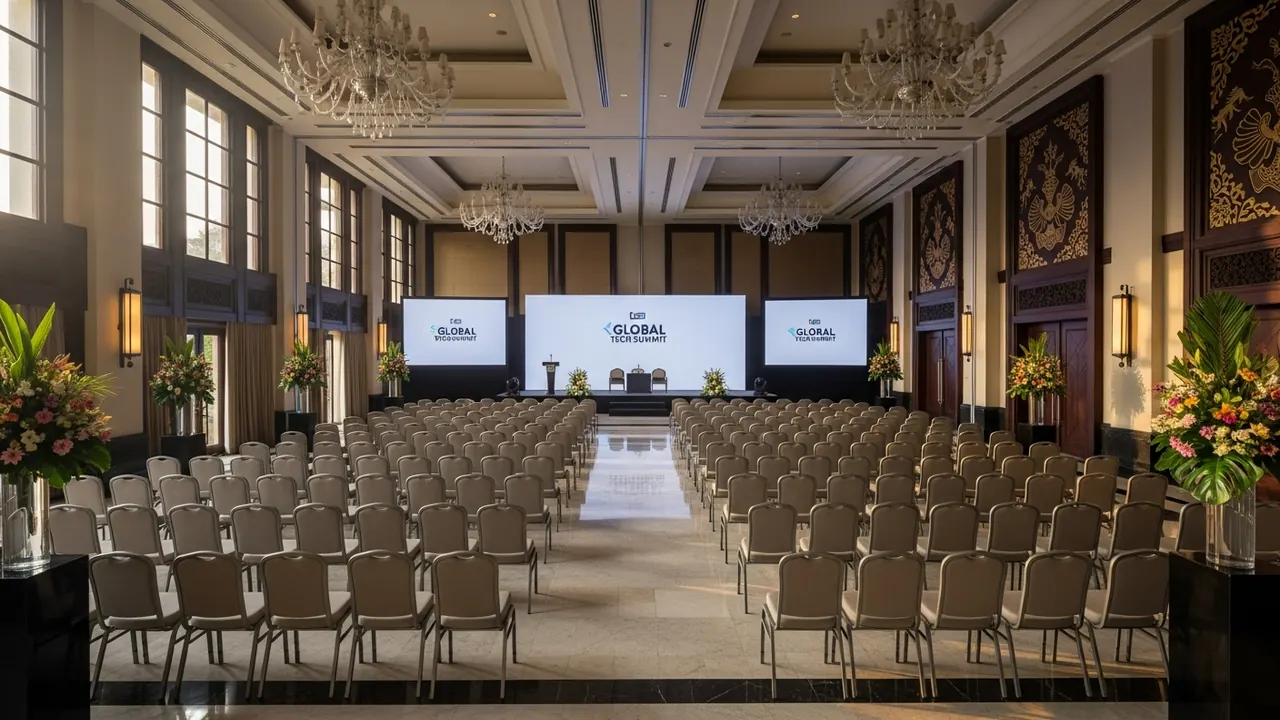
The firm data point comes from the island’s principal convention hall. The Bali Nusa Dua Convention Center (BNDCC) — the largest purpose-built convention facility in Bali, located in Nusa Dua — has as its main space the Nusa Dua Hall: a pillarless room of 4,400 square metres rated at up to 5,000 delegates in theatre-style seating [VERIFIED, venue-issued data from BNDCC and corroborated by AIPC and Meetings Show APAC listings]. BNDCC also lists 44 multi-flexible function rooms [industry listing — flag; not a headline figure on BNDCC’s own primary pages]. Do not confuse the BNDCC with the separate Bali International Convention Centre (BICC) at the Westin Nusa Dua, which was built for the 1992 Non-Aligned Movement Summit [VERIFIED, Wikipedia] and operates as a distinct facility.
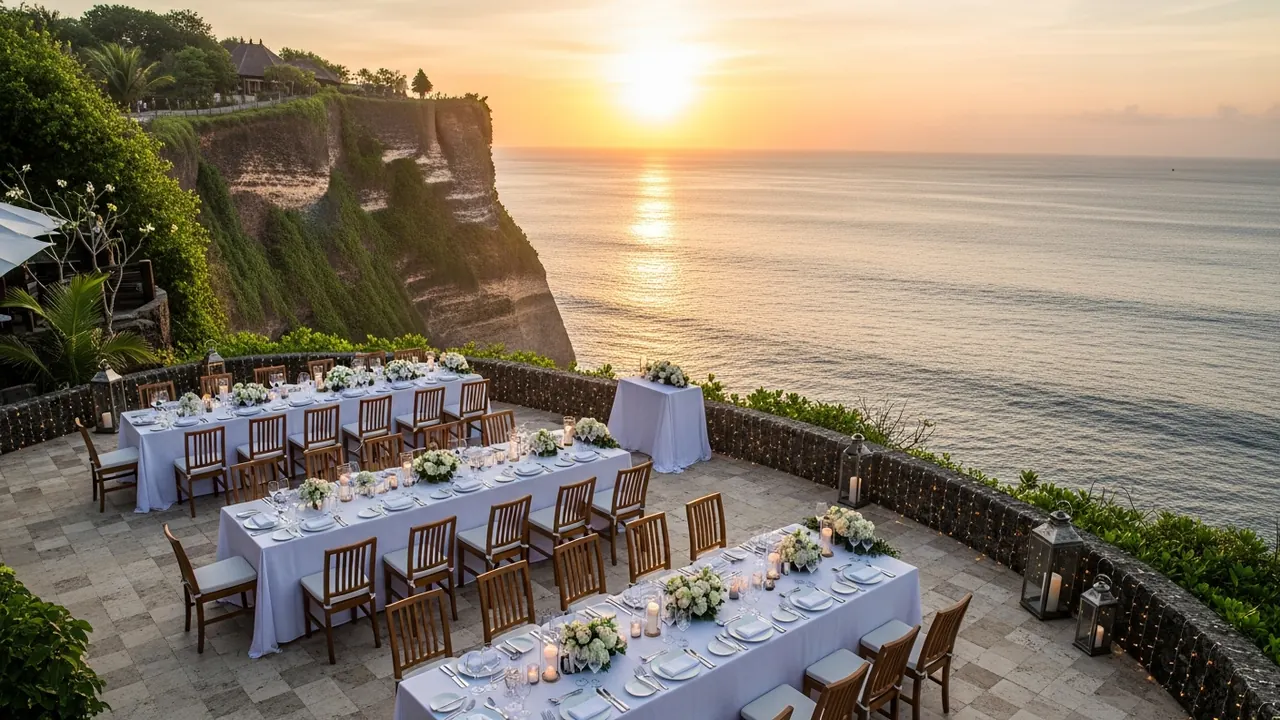
For outdoor events, Garuda Wisnu Kencana (GWK) Cultural Park in Ungasan — approximately 60 hectares at around 263 metres above sea level, roughly 10–15 minutes from Ngurah Rai Airport [VERIFIED, Wikipedia] — hosts large-scale outdoor galas. Its Lotus Pond plaza is conventionally cited at up to 7,000 delegates for events [multi-source: Wikipedia and event-industry sites — flag the 4,400 sqm area figure as single-source]. The GWK Amphitheatre is cited at approximately 800 seats [effectively single-source — verify for your brief]. Beach clubs and cliff-top venues across Uluwatu, Seminyak and Canggu can take smaller-to-mid-size groups for cocktail events and dinners, but no independently verifiable neutral-source capacities exist for those venues — describe them by type and use rather than relying on marketing numbers.
The practical ceiling for a single-venue conference is therefore around 5,000 theatre-style at BNDCC’s Nusa Dua Hall. Events above that figure would require multi-venue or multi-session formats and are uncommon in the Bali MICE market.
What Does a Corporate Event in Bali Cost Per Person?
There is no reliable published figure, and any vendor who quotes you a fixed per-head price before understanding your brief is shortcutting a complex equation. Pricing is assembled from variable components: venue hire, accommodation room block, food and beverage, audio-visual and production, transfers, on-site staffing, team-building activities, gala entertainment, permits and compliance, DMC fee or margin, and a contingency buffer. Change any one variable — venue tier, headcount, season, production complexity, nationality of talent — and the per-delegate number shifts substantially.
What drives cost most, in rough order of impact:
- Venue choice and whether it is a buyout. A dedicated resort buyout in Nusa Dua commands a meaningfully different rate from a ballroom rental at a conference hotel.
- Season. Availability and pricing tighten materially during the dry season peak (broadly April–October) and around major Indonesian and international holidays. Booking early — ideally 6–12 months out for anything above 150 delegates — is sound practice, not just a sales line.
- Production and AV complexity. A general session with basic staging is a different line item from a product launch with custom LED walls, live broadcast or international talent.
- F&B per day per person. Catering costs vary widely by meal type, service style, locally sourced versus imported ingredients, and beverage packages.
- DMC margin model. Ask whether the model is a disclosed percentage on components, a flat management fee, a cost-plus arrangement, or a combination — and ask which items carry double margin.
Bali is commonly described as materially less expensive than Singapore, Sydney or London for comparable events. That is a widely repeated claim rather than a verified cost-comparison study, so treat it as a directional observation and confirm your specific budget posture with a scoped quote. Submit a complete brief via our enquiry form or reach us on WhatsApp at +62 811 3942 3875 and we will route your inquiry to a vetted local partner for an itemized proposal — at no cost to you.
Do Delegates Need a Visa to Attend a Corporate Event in Bali?
This is general information, not immigration advice. Visa requirements change with Indonesian policy and depend on nationality. Verify current rules with the Indonesian Directorate General of Immigration (imigrasi.go.id) or a licensed immigration adviser before sending delegate briefing packs.
That said, here is the practical framework as of the date of publication:
- Visa on Arrival (VOA) / e-VOA: Available to nationals of a substantial list of countries, commonly granting up to 30 days’ stay with one extension possible. This covers passive attendance at conferences and incentive programs for most major source markets. Fees and eligible nationalities are set by Indonesian Immigration and change — check the current official list.
- Single-entry business e-visa (B211A-type): Commonly issued for up to 60 days with a sponsor requirement. Appropriate when the duration exceeds the VOA window or when the nationality is not on the VOA list. The sponsorship and application process takes lead time — factor this into delegate registration timelines.
- Speaking vs attending: This is the distinction that catches planners off guard. Passive attendance at a conference generally falls within the VOA or business-visa remit. Delivering a paid keynote, conducting training, performing (live music, entertainment) or any other activity that constitutes working in Indonesia is legally a different category and may require a work permit or KITAS, depending on the role and duration. This is a case-by-case determination. Do not assume a speaker’s VOA covers their activity — verify.
One practical note: Bali’s airport, Nguyen Rai International (DPS / Denpasar), handled approximately 24 million passengers in 2024 [secondary, compiled — Wikipedia stats table], essentially at its stated nominal capacity. Immigration queues at peak arrival times can be long. For large incentive groups, coordinating a group VOA or pre-arranged immigration facilitation with your DMC is worth discussing early.
Who Handles Event Permits in Bali?
This is general information, not legal or regulatory advice. Permitting practice in Bali varies by regency (Badung, Denpasar and Gianyar have slightly different processes), by venue type, by event scale and by whether the event is private or public-facing. There is no single published numeric threshold — no official rule stating that events above a specific headcount automatically require a specific class of permit.
The practical framework:
- Private, closed-door events at licensed hotels and convention venues (conference rooms, ballrooms, BNDCC) are typically handled by the venue itself or the appointed DMC as part of their standard operating relationship with local authorities. The venue holds the relevant business and operating licenses.
- Large, public or outdoor events generally require a combination of: a location/event permit from the relevant regional government office; police security and crowd-management clearance (scaled by size and perceived risk to Polsek, Polres or Polda level); noise and environmental compliance; and, critically in Bali, banjar (village council) consent for any event using community spaces or affecting the neighbourhood. The banjar layer is a genuine Bali-specific requirement that is absent in most other Indonesian cities.
- Environmental and trash-removal plans are now commonly required as part of the permitting package for outdoor events. This reflects Bali’s ongoing policy response to waste management pressure.
- Foreign talent — international DJs, performers, MCs, technical crew — requires an additional step: the engaging party (or a licensed impresario) must file a work-permit notification. Lead time is approximately one month. A tourist visa does not authorize working, and this catch is worth flagging to procurement teams who think the talent’s visa status is their problem alone to solve.
In short: for a 200-person conference at a hotel, the venue handles most of the permitting process and your DMC manages the coordination. For a 1,000-person outdoor gala at a cultural park, you need a DMC with documented experience working through the Badung or Gianyar permitting offices. Ask for evidence of past permit applications, not just assurances.
What Is the Best Season for Corporate Events in Bali?
Bali has two seasons by general climatology. The dry season runs broadly from April to October: lower rainfall, lower humidity, more reliable outdoor conditions. The wet season runs broadly November to March: higher rainfall probability, though events do operate year-round and many indoor or covered venues are unaffected.
For planning purposes, the dry season is the safer choice for outdoor galas, beach events and activities with weather-dependent logistics (sunrise hikes, water sports, open-air team-building). Build contingency plans regardless — a rain plan for any outdoor element is not optional, it is standard operations.
The non-negotiable planning constraint is Nyepi, the Balinese Hindu Day of Silence. On Nyepi, Bali effectively shuts down for approximately 24 hours: no flights at Ngurah Rai Airport, no movement on public roads, no lighting, no noise. The date shifts annually on the Saka calendar — typically falling in March. For any event in the January–April window, verify the Nyepi date for that year and plan delegate arrivals and departures around it. Stranding delegates at the airport or in their hotels for 24 hours is not a recoverable program error.
On demand pressure: the dry season peak, particularly June to August, concentrates both leisure tourism and corporate events. Venue availability and room-block rates tighten materially during these months, and premium beachfront venues can be pre-committed months in advance. Contracting your room block and venue 9–12 months out for a mid-year event above 100 delegates is not excessive caution, it is routine best practice in the Bali market.
Secondary pressure periods: Indonesian public holidays (Eid, Christmas and New Year) and major regional conference seasons. A quick check of the Indonesian public holiday calendar against your proposed dates should be part of every initial feasibility assessment.
How Does Bali DMC Agency Make Money? Are You Independent?
We are independent. Bali DMC Agency is not a DMC, PCO, venue, hotel or event organizer. We do not sell, operate or staff events. We publish neutral guidance — verified specs, cost-range models, RFP frameworks, compliance overviews — so corporate buyers can brief, budget and vet suppliers with confidence before they enter a commercial relationship with anyone.
On funding: no supplier, venue or DMC can pay to change what we publish. If you use our free guidance and go on to work with a partner we introduce you to, that partner may pay us a referral fee at no extra cost to you. We disclose that relationship openly — it is the basis of our business model, and we believe transparency about it is more useful to buyers than pretending independence is costless to maintain.
The practical implication: our editorial content — venue specs, visa frameworks, permit practice, cost-range logic — is written to serve the buyer, not to channel enquiries toward the highest-paying vendor. When we route you to a partner, it is one vetted, accredited local operation, not a rotating list of whoever paid most that quarter.
Ready to take the next step? Submit your brief via our enquiry form or reach the team directly on WhatsApp at +62 811 3942 3875 or by email at [email protected]. We will come back with a scoped introduction, not a sales pitch.
Quick-Reference Comparison: DMC, PCO, EO and Travel Agent
| Supplier Type | Primary Function | Destination Scope | Typical Buyer | Common Bali Use Case |
|---|---|---|---|---|
| DMC | Local ground-handling (transfers, venues, on-site ops) | One destination | Corporate buyer, overseas agency, PCO | Incentive programs, conference ground-handling, gala logistics |
| PCO | End-to-end conference management (registration, program, sponsorship) | Multi-destination | Association, corporate events team | International association congresses, multi-track corporate conferences |
| Event Organizer (EO) | Creative, production, staging | Variable | Marketing team, brand | Product launches, gala dinners, brand experiences |
| Travel Agent | Flight and accommodation booking | Any | Individual or group travellers | Group flight coordination, pre/post tour add-ons |
Note: These distinctions are industry convention, not legal definitions. Vendors frequently overlap categories. Verify in-scope versus subcontracted services in writing.
Verified Facts at a Glance
| Fact | Figure | Source Status |
|---|---|---|
| BNDCC Nusa Dua Hall — theatre-style capacity | Up to 5,000 delegates | Verified — venue-issued (BNDCC, corroborated AIPC) |
| BNDCC Nusa Dua Hall — floor area | 4,400 sqm, pillarless | Verified — venue-issued |
| BNDCC function rooms | 44 multi-flexible | Flag — industry listing, not confirmed as BNDCC headline figure |
| GWK Lotus Pond — event capacity | Conventionally cited up to 7,000 | Flag — multi-source but not venue-issued; area figure (4,400 sqm) is single-source |
| GWK Amphitheatre — seating | ~800 seats | Flag — effectively single-source; verify for your brief |
| G20 Leaders’ Summit in Bali | November 2022, Nusa Dua | Verified — official G20 records |
| IMF–World Bank Annual Meetings in Bali | 8–14 October 2018, Nusa Dua | Verified — IMF, World Bank, ITDC |
| Bali ICCA 2023 ranking — Asia-Pacific cities | ~10th | Flag — ICCA 2023 data via secondary trade press (TTGmice, Mix Meetings); ICCA tables paywalled |
| Indonesia ICCA 2023 — global rank | 37th, 98 international association meetings | Flag — same secondary source; absolute counts vary slightly between outlets |
| DPS airport to Nusa Dua by road | ~12–15 km, ~20–30 min via Bali Mandara Toll | Approximate — mapping-derived; peak traffic materially extends this |
| Dry season (better for outdoor events) | Broadly April–October | General climatology — standard knowledge, no specific weather source |
| Typical delegate visa — VOA/e-VOA | Often up to 30 days, extendable once | General practice — verify current rules at imigrasi.go.id; nationality lists and fees change |
More Bali MICE & Corporate Event Questions Answered
Can I hold a team-building event outdoors during Bali’s wet season?
You can — many suppliers operate year-round and hotels have covered contingency spaces — but outdoor activities in the wet season (broadly November to March) carry meaningful weather risk. A competent DMC will build a rain plan into every outdoor program: a covered venue alternative, a modified agenda and pre-agreed trigger conditions for switching. Events without a rain plan are not well-run programs; if a supplier does not raise the contingency question, raise it yourself.
Is Garuda Wisnu Kencana (GWK) the only large outdoor event venue in Bali?
No, but it is the most commonly cited large outdoor venue with a published event-use track record. Other outdoor options — cliff lawns at luxury resorts in Uluwatu, beachfront spaces in Jimbaran, poolside areas at Seminyak and Canggu beach clubs — are used for smaller-to-mid-size events. Hard capacities for those venues are not available from independent neutral sources; use figures from marketing materials as a starting estimate only, and confirm with the venue directly. Our venues guide covers the selection framework in more detail.
What should I ask a Bali DMC before signing a contract?
Seven questions worth putting in writing: (1) Which services are delivered in-house versus subcontracted, and who holds liability for each? (2) What is the margin model — cost-plus, disclosed percentage or flat management fee? (3) What is the cancellation and force-majeure policy, and does it match your company’s risk tolerance? (4) Are quotes in IDR or USD, and who absorbs foreign-exchange movement? (5) What permits does my event require, and has the DMC secured these before? (6) How does the DMC handle on-site emergencies — is there a 24-hour duty manager? (7) Can I see references from events of similar scale and format? These are not adversarial questions — a confident, experienced DMC will answer all of them without hesitation.
Does Bali DMC Agency charge buyers a fee for its guidance or introductions?
No. Our guidance — this FAQ, the venue specs, the cost models, the RFP frameworks — is free to read and use. If you use our guidance and go on to work with the partner we introduce you to, that partner may pay us a referral fee. You pay nothing extra; the fee comes from the supplier side and is disclosed. We do not charge buyers a consulting or introduction fee. If anything about this arrangement gives you pause, ask us directly — transparency is the point.
How far in advance should we book a large corporate event in Bali?
For events above roughly 100 delegates during the dry-season peak (April–October), 9 to 12 months of lead time is standard practice, not an upsell. Room blocks at Nusa Dua conference hotels, venue hire at premium beachfront locations and high-capacity ballroom dates can be contracted 12–18 months in advance by repeat corporate buyers. Leaving a 300-person incentive program to six months before departure in June or July is asking your DMC to work very hard on a constrained inventory. Smaller groups and shoulder-season dates have more flexibility, but the same principle applies: earlier is better, and early optioning costs nothing.