

Information only — not legal or immigration advice. Indonesian visa rules, permit procedures and fee schedules change without notice. Everything on this page is general background, not professional counsel. Before committing budget or sending invitations, verify current requirements directly with the Indonesian Directorate General of Immigration, the relevant local government authority, and a licensed Indonesian legal adviser. Rules also vary by nationality, event type, regency and circumstance.
Bali event permits for foreigners cover two overlapping compliance tracks that every corporate planner needs to map before the venue contract is signed: the delegate visa (how your attendees enter Indonesia and what they are legally permitted to do once inside) and the event permit (what local, police and environmental approvals the event itself requires). Neither track has a single set of published rules that applies universally. Both depend on nationality, event format, venue type, headcount and the regency where the event takes place. Getting this wrong does not just mean a fine — it can mean delegates refused at immigration, a DJ detained at the airport or a permit denied on the afternoon of load-in. This page gives you the plain-English map. The specifics, you verify with primary sources and a local DMC.
Why Permits and Visas Sit Together on the Planner’s Checklist
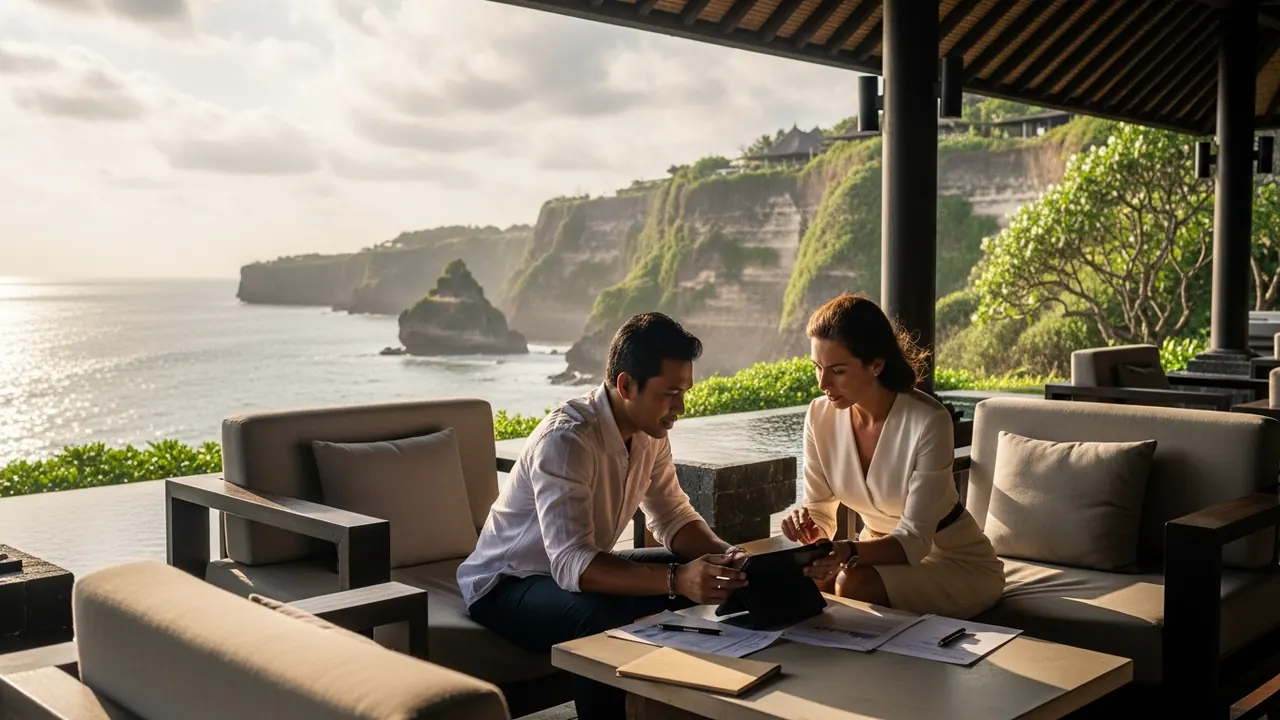
Most event planning guides treat visas and permits as separate checklists. In practice, they are entangled. A keynote speaker who enters on a tourist stamp is working illegally regardless of whether the event itself has every permit in order. A permitted outdoor gala that brings in a foreign MC without a work-notification letter is exposed even if the banjar council signed off on the noise plan. The compliance picture only makes sense when you see both tracks at once.
Bali’s standing as a serious international meetings destination is well established. Indonesia ranked 37th globally in the ICCA 2023 data (98 international association meetings), with Bali placing 10th in the Asia-Pacific city ranking — a position built partly on the strength of events like the G20 Leaders’ Summit in November 2022 and the IMF-World Bank Annual Meetings in October 2018, both held in Nusa Dua. Events of that scale have dedicated government liaison and a logistics machine most corporate planners will never need. What corporate planners do need to understand is the framework that applies from roughly 50 delegates upward, where the permitting questions become real and consequential.
Delegate Visa Indonesia: What the Options Actually Are
The Indonesian visa landscape for business visitors is not simple, and any page that gives you a tidy nationality-by-nationality table is either out of date or about to be. Fees, eligible nationalities and exact stay durations shift with regulatory updates that are not always publicised in advance. What follows is a description of the most commonly used pathways as of general practice — flag this as volatile, and check current status with the Directorate General of Immigration or your Indonesia-based legal contact before issuing delegate instructions.
Visa on Arrival and the Electronic VOA (e-VOA)
For many nationalities, the standard entry point for a short conference or incentive program is the Visa on Arrival (VOA) or its electronic pre-arrival equivalent, the e-VOA. Both commonly allow a stay of up to 30 days. The e-VOA is processed online before departure and lets delegates skip the VOA queue at Ngurah Rai International Airport — a meaningful operational advantage if you have a large group arriving on a single flight. The VOA is extendable once for an additional period (commonly matching the original stay length), which is relevant if your program runs close to the initial validity limit or if delegates plan personal travel after the event.
Not all nationalities qualify for VOA. The eligible list changes and is not guaranteed to include every nationality in your delegate roster. Brief your attendees to verify their own eligibility with the Indonesian embassy or consulate in their home country — do not rely on what applied to a previous group or what another supplier told you informally.
The B211A Business E-Visa
For delegates who need a longer stay, or whose nationality is not on the VOA-eligible list, the single-entry business e-visa (commonly referenced as the B211A type, though classification details should be verified with current immigration guidance) is the standard alternative. This visa typically allows stays of up to 60 days and requires a local Indonesian sponsor — normally a registered Indonesian company that formally guarantees the purpose of the visit. For a corporate event, the sponsoring entity is typically the local DMC, event organizer or the Indonesian affiliate of the international company running the program.
The sponsor requirement adds lead time. Sponsorship documents need to be prepared, signed and submitted before the visa application can be processed. For a multi-nationality delegate list, this is not a last-minute task. Build at minimum three to four weeks into your timeline, longer if your sponsoring entity is processing applications for a large group simultaneously.
The Legally Sensitive Line: Passive Attendance Versus Working
This is the point that vendor guides consistently gloss over, and it is the one most likely to create a real problem for your program.
Attending a conference as a delegate — sitting in a plenary, joining a breakout, dining at the gala — is generally treated as passive attendance compatible with a business visa or VOA. Speaking, presenting, facilitating, performing or taking on any role that could be characterised as employment or commercial activity is a different category. Whether a specific activity crosses that line is a case-by-case immigration question, and the answer can depend on whether the person is remunerated, whether the event is open to the public, and how the sponsoring organisation structures the arrangement.
The practical implication: if any of your delegates are also speakers, workshop leaders, moderators or performers, those individuals need their visa category reviewed separately. A tourist stamp is not a legal basis for any of these roles. A business VOA may cover some cases and not others. When in doubt, the correct path is to seek a formal written position from Indonesian immigration counsel — not to assume that what worked at a previous event in a different country applies here.
| Pathway | Typical Duration | Sponsor Required? | Pre-arrival Application? | Key Limitation |
|---|---|---|---|---|
| Visa on Arrival (VOA) | Commonly up to 30 days; extendable once | No | No (issued on arrival) | Not all nationalities eligible; passive attendance only |
| e-VOA | Commonly up to 30 days; extendable once | No | Yes — apply online before travel | Same nationality list as VOA; queue bypass advantage for groups |
| Business e-visa (B211A type) | Often up to 60 days, single entry | Yes — Indonesian registered sponsor | Yes — apply before travel | Sponsor lead time; speaking/performing roles still need separate review |
All figures are general practice as understood at publication. Durations, fees and eligible nationalities are set by the Indonesian Directorate General of Immigration and change without notice. Verify before issuing delegate instructions.
Bali Event Permits for Foreigners: Understanding the Framework
The question corporate buyers most often ask is: “At what headcount does my event need a permit?” The honest answer is that no published numeric threshold exists in accessible Indonesian law that maps cleanly onto event type. Practice is the guide, and practice varies by regency, venue, event format, season and — frankly — the relationship and track record of the DMC handling the application. What follows is the structural framework, not a guarantee of how it applies to your specific event.
Private Closed-Door Events at Licensed Hotels and Venues
If your event takes place entirely inside a licensed four- or five-star hotel or convention venue — ballroom, meeting rooms, pre-function areas — the permitting load is substantially reduced. The venue itself holds the operational licences and manages its own compliance with local zoning and noise regulations. In most cases, the hotel’s event department handles the administrative side as a standard part of their service agreement. Your DMC’s role here is coordination and oversight, not permit origination.
This applies to the vast majority of corporate conferences, incentive dinners and product launches run at Bali’s established hotel inventory in areas like Nusa Dua, Seminyak and Ubud. The Bali Nusa Dua Convention Center (BNDCC), for example, operates within an established legal and operational framework that its management handles directly for each event. What a DMC watches for in this context is less about raw permits and more about specific vendor permissions — whether an outside AV contractor needs clearance to work on-site, whether a sponsor activation requires specific approval, or whether an off-menu catering arrangement needs to be formalised.
Large, Public or Outdoor Events: Where Bali Corporate Event Permits Become Substantive
Step outside the controlled environment of a hotel, or scale up to a large outdoor program, and the permit picture changes materially. Bali’s permitting framework for outdoor and public events operates at multiple levels of government simultaneously, and a experienced local DMC is not optional for this category — they are operationally essential.
The primary layers that typically apply:
- Location / Venue Use Permit
- Formal permission to use a specific outdoor or non-standard site for an event. Required where the site is not itself a licensed event venue. The issuing authority depends on the land classification and regency — Badung, Denpasar and Gianyar each have their own land and spatial planning offices and their own procedures.
- Police Security and Crowd Management Clearance
- Typically required for events above a certain scale or risk profile. The level of police authority involved reflects the perceived risk: local village-level security (Polsek) handles small community events; district police (Polres) covers mid-scale events; regional police (Polda) is involved for large or high-risk events. There is no published table that tells you which level applies to your specific headcount. A Bali-based DMC with a track record in outdoor events knows from experience what threshold triggers what level of review — and they know the contacts and timelines. Allow substantially more lead time than you think you need. Last-minute permit applications for large outdoor events in Bali do not go well.
- Noise and Environmental Approval
- Events with amplified music, outdoor generators or significant lighting rigs typically need noise-level approvals and sometimes a basic environmental impact assessment. The threshold is determined by local regulation and varies by area. Uluwatu cliff venues, beach clubs in Seminyak and open-air sites in Ubud’s cultural zone each carry different sensitivities. What is straightforward in an industrial area near the airport may need additional paperwork near a temple or rice-field preservation zone.
- Banjar and Village Council Consent
- This is the layer that surprises foreign planners most. Bali’s banjar system — the traditional village administrative unit — retains meaningful authority over activities in its territory. For events near temples, on community land, or in areas with cultural or religious significance, banjar consent is not a formality. It is a genuine gate. Experienced DMCs maintain working relationships with banjar leaders in the areas where they regularly operate events. Bringing this conversation late, or handling it without local cultural fluency, is a common source of last-minute problems.
- Trash Removal and Environmental Management Plan
- A relatively recent addition to the standard permit package for outdoor events in Bali. Local authorities now commonly require a documented plan for waste management and site restoration as a condition of permit approval. This is partly driven by genuine environmental concern — Bali’s waste challenges are well documented — and partly by the increased scrutiny that large outdoor events attract from environmental agencies and civil society groups. Your DMC will typically prepare this as part of the permit pack, but it is a real deliverable that requires supplier engagement, not a box-tick.
One more point on the permit framework: practice varies meaningfully between regencies. An event that sails through the approval process in a Badung hotel precinct may face a different sequence of steps and different offices in Gianyar or Denpasar. Do not assume that what applied to your last Bali event — or to your DMC’s last event in a different part of the island — maps directly onto your current program.
Ready to map your event’s specific permit requirements? Use our enquiry form or reach our concierge directly on WhatsApp at +62 811 3942 3875 and we will route you to a vetted local DMC that handles the permitting process end-to-end.
Foreign Talent Work Permit Bali: DJs, MCs, International Crew
The question of whether your foreign speakers need a different visa has a parallel track for foreign creative and technical talent: performers, DJs, international MCs, touring AV crews and specialist technicians. Tourist and business visas are not a legal basis for paid performance or technical work in Indonesia. The requirements here are specific and the lead times are real.
The Licensed Impresario Requirement
Bringing foreign performing artists or creative professionals into Indonesia legally requires the involvement of a licensed Indonesian impresario — a registered entity authorised by the Ministry of Manpower to sponsor and manage the engagement of foreign performing talent. The impresario acts as the formal Indonesian party responsible for the foreign worker’s legal status during the engagement. They handle the engagement permit application and, in most cases, the work-permit notification filing.
Not every DMC is a licensed impresario, and not every impresario handles every category of talent. If your gala dinner features an international DJ, your awards show has a foreign celebrity MC, or your production crew includes overseas specialists, your DMC needs to be either the impresario or have a formal arrangement with one. Ask this question explicitly when you brief suppliers — do not assume it is covered by a standard event management agreement.
Work-Permit Notification and Lead Time
The work-permit notification process — the formal submission to Indonesian authorities that a foreign national will be performing or working at a specific event — typically requires approximately one month of lead time, and can take longer if the relevant ministry office is handling high volumes or if documentation from the foreign talent’s side is slow. “We confirmed the DJ last week” and “the event is in three weeks” is a scenario that experienced impresarios hear often and dread equally often. It does not always end well.
Build the impresario and work-notification lead time into your talent contracting process, not your event production schedule. The moment a foreign performer is confirmed — before riders, before logistics, before accommodation — the permit process should begin. The talent’s own agent or management will need to supply documentation, and international touring schedules do not always accommodate urgent Indonesian permit paperwork promptly.
Tourist Visa Is Not a Workaround
This bears stating plainly because it is regularly attempted and regularly creates problems. Having a performer enter on a tourist visa and then perform at a private corporate event does not make the performance legal. Immigration enforcement at Nguyen Rai International Airport has become more systematic, and the risk of a foreign artist being refused entry or detained on arrival because their travel history or declared purpose does not match their actual engagement is real and non-trivial. The consequences land on the event — and on the client who organised it.
Practical Timeline: Building Compliance Into Your Event Schedule
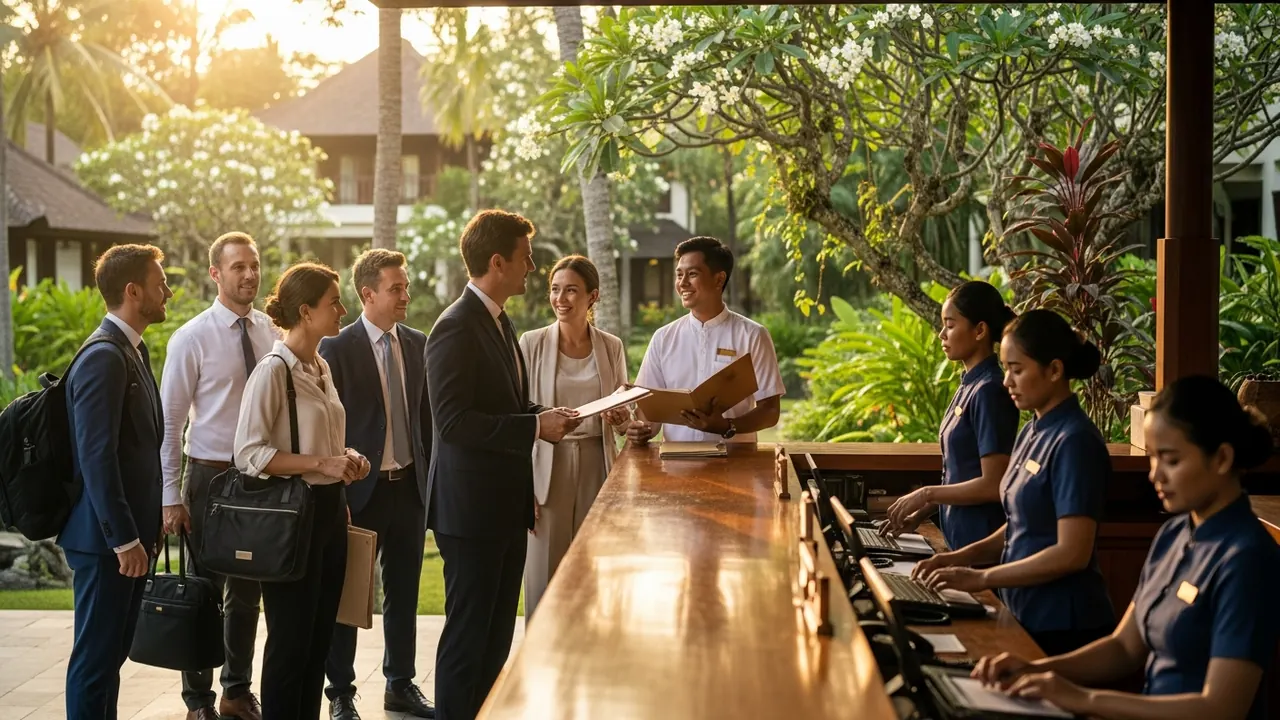
Permit and visa processes in Bali operate on Indonesian government timelines, not on your event deadline. The single most common avoidable problem in this space is starting the compliance process too late. Here is a general-practice guide to the lead times that experienced Bali DMCs work toward. These are not guarantees — they are the planning assumptions that avoid crises.
- 12+ weeks before the event
- Engage your local DMC. Begin the outdoor venue permit process if applicable. Start the conversation with the banjar. Identify foreign talent and engage an impresario.
- 10–12 weeks before
- Issue delegate visa guidance. Begin B211A business e-visa sponsorship for delegates who need it. Submit impresario-led work permit notification for all foreign performing or technical staff.
- 8–10 weeks before
- Police permit applications for outdoor or large-scale events. Noise and environmental plan submission. Confirm VOA/e-VOA eligibility for all remaining nationalities on delegate list.
- 4–6 weeks before
- Chase outstanding permit confirmations. Finalise trash-removal and environmental management documentation. Distribute confirmed visa guidance to all delegates.
- 2 weeks before
- All permits in hand or confirmed in writing. All work-permit notifications confirmed. Delegate visa questions resolved. No permit process should still be in progress at this stage for an outdoor or large-scale event.
How a Local DMC Handles This — and What You Should Expect
The compliance picture described above is exactly why experienced corporate planners do not attempt to self-manage Bali event permitting from overseas. A seasoned local DMC does not simply submit forms on your behalf — they know which office to approach first, which sequence of approvals to follow, when a relationship conversation with a banjar head matters more than a document submission, and how to structure your event’s paperwork to fit the actual approval pathway rather than the theoretical one.
What you should expect from a reputable DMC on the compliance side: a permit and visa checklist scoped to your specific event early in the planning process, clear timelines with milestones and ownership, proactive flagging when something changes (and in Bali, things do change), and written confirmation of each approval as it arrives rather than a verbal assurance that “everything is fine.”
What you should not accept: a supplier who tells you permitting is straightforward without asking you any questions about your event format, location, headcount or talent roster. The answer to “is this complicated?” is always: “it depends, and here is what we need to know to tell you.”
On this site, we do not sell event management or permitting services ourselves. If you use our free guidance and proceed with a partner we refer you to, that partner may pay us a referral fee at no extra cost to you — we disclose this openly. What we can do is route your enquiry to a vetted DMC that handles Bali event permitting regularly and will give you a straight answer about what your program actually needs. Submit your brief via our enquiry form or reach us on WhatsApp at +62 811 3942 3875.
Frequently Asked Questions
Do all foreign delegates to a Bali conference need a business visa rather than a tourist visa?
Not necessarily, but it depends on the activity. Passive conference attendance — sitting in sessions, networking, attending a gala dinner — is generally compatible with a Visa on Arrival or e-VOA for eligible nationalities. The meaningful distinction is between passive attendance and any role that could be characterised as working or commercial activity: presenting, speaking, facilitating, performing. Anyone in those roles should have their specific situation reviewed by Indonesian immigration counsel before travelling. Do not rely on general assumptions or on the category that applied at a previous event.
Is there a headcount above which a Bali corporate event permit is legally required?
No published numeric threshold exists that maps headcount directly to a specific permit requirement in a way that applies uniformly across all event types and locations. The decision to require permits — and which permits — is made by local authorities based on the event’s format, location, scale, public or private character, and risk profile. A 200-person outdoor beach gala at an unlicensed site has very different permit requirements from a 500-person conference in a licensed convention hotel ballroom. Practice also varies by regency: what Badung applies differs from Denpasar or Gianyar. A local DMC with relevant experience is the only reliable guide to what your specific event actually needs.
Can a foreign DJ or MC enter Bali on a tourist visa to perform at a private corporate event?
No. Tourist visas and standard business visas do not provide legal authorisation to perform or work commercially in Indonesia. Foreign performing talent requires a licensed Indonesian impresario to sponsor and manage the engagement, plus a work-permit notification filed with the relevant ministry — a process that typically needs around one month of lead time. Performers who arrive on tourist stamps risk being refused entry or detained by immigration. This is a real and recurring issue, not a theoretical one. Engage the impresario at the same time you confirm the talent contract, not as an afterthought once logistics are already in motion.
What is the banjar, and why does it matter for my event permit?
The banjar is Bali’s traditional village administrative unit — a locally governed community body that retains genuine authority over activities in its territory, particularly near temples, on community land or in culturally sensitive areas. For outdoor events in these zones, banjar consent is a real gate in the permit process, not a formality. Banjar leaders make decisions based on local norms, prior relationships and the nature of the proposed event. This is one of the strongest arguments for engaging an experienced Bali-based DMC: they maintain working relationships with banjar heads in the areas where they regularly operate, and they know how to structure these conversations in culturally appropriate ways that a foreign organiser approaching cold simply cannot replicate.
How far in advance should I start the permit and visa process for a large Bali corporate event?
For a large outdoor event or one involving foreign performing talent, the honest answer is: earlier than you think. Most experienced Bali DMCs want the permit conversation to begin at least 10 to 12 weeks before the event date, and the foreign-talent impresario process should start the moment talent is confirmed. Police permit applications, banjar consent conversations, noise-plan submissions and trash-removal documentation all have their own timelines that do not compress well under pressure. Two to four weeks before the event, every approval should be either in hand or confirmed in writing. If a supplier is still chasing key permits at that stage, that is a red flag — not a normal situation.
Reminder: This page is general information only, not legal, immigration or professional advice. Indonesian regulations change. Verify all permit and visa requirements with the Indonesian Directorate General of Immigration, relevant local government offices, and a licensed Indonesian legal adviser before committing to any event plan or issuing delegate travel instructions. Nothing here should be relied upon as a statement of current law or official government practice.