How to use this page: Bali DMC Agency is an independent buyer’s guide to Bali MICE — we are not a DMC, PCO, venue, or transport operator ourselves. A DMC manages on-the-ground logistics, venues, and transport; it is not the venue or the conference organiser. Capacities, group sizes, and budgets shown are indicative ranges flagged [VERIFY] (mid-2026) and must be confirmed in writing with the relevant supplier, venue, or broker before you commit — this is general information, not legal, tax, or procurement advice; confirm delegate visas and event permits with the appropriate authority or your notary as relevant. We may earn a referral commission when we connect you to a vetted partner, which never changes the price you are quoted.
A product launch event in Bali is a different operational discipline from an internal conference, and most venue and supplier pitches will not tell you why. Bali product launch events are brand-facing, outward-looking productions where the audience is media, trade buyers, distributors, or consumers — not your own delegates — and where the primary deliverables are coverage, footage, social amplification, and a brand impression that travels far beyond the room. That changes what you need from a venue, from your production team, from your local logistics partner, and from your legal checklist. This guide is written from the planner’s seat: what to scope, what to budget, and where the surprises are buried.
How a Product Launch Differs From a Corporate Conference
The structural differences matter for your brief and for your supplier RFP. At an internal conference, your audience is known, badged, and broadly on-side. At a product launch or press event, the room contains journalists, influencers, distributors, agency partners, and invited guests who are there to form an opinion and report it. The experience they have, the footage they shoot, and the story they take away are the product. That is not how most Bali DMC and venue pitches are framed.
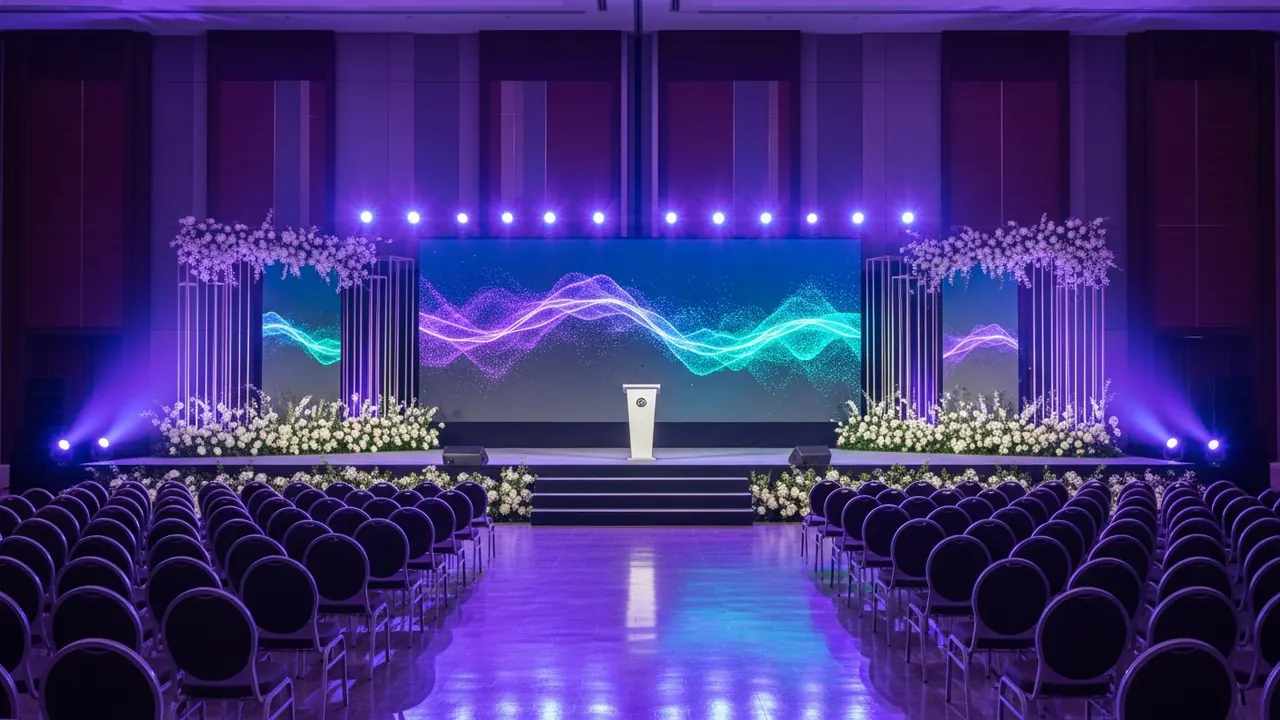
Four practical differences follow from this. First, media handling and photo and video requirements shape the room layout rather than delegate flow. Press risers, media registration, designated photography areas, embargoed briefings, dedicated Wi-Fi bandwidth for live upload, and a media room or quiet space for one-to-one interviews are requirements that a conference venue checklist does not include by default. Second, brand environment design is structural, not decorative. For a brand launch event in Bali, the set is the product presentation — the backdrop, the lighting state for photography, the surface textures, the step-and-repeat or branded hero wall are all controlled for how they appear in an image, not just how they appear to someone standing in the room. Third, demo logistics apply where the product requires it — a vehicle, a device, a physical good that needs to be staged, lit, secured, moved, or operated by talent during the presentation. Fourth, guest-list management for a press launch is more granular than delegate registration: credentialling journalists, managing embargo sign-offs, controlling what content is released when, and having a clear briefing protocol for spokespeople.
For a roadshow — a multi-city or multi-venue format where your brand team travels and presents the same material in sequence — there is an additional layer: replication and consistency. What works for one venue on day one must execute at the next venue without loss of quality, and your local logistics partner needs to manage the load-in, rigging, and teardown schedule across stops.
Scoping Your Launch Brief: What a Supplier Needs From You
A brief that says "we need a product launch venue in Bali" will generate a set of proposals that are largely incomparable. A brief that answers the following questions will generate proposals you can actually evaluate.
- Event type and format
- Is this a press-only launch, a trade launch, a consumer activation, or a combination? Is it a single reveal moment, a half-day programme with demos and breakouts, or a full-day brand experience? Does it include a VIP dinner following the launch?
- Guest count and profile
- How many invitees, and in what categories: accredited press, social media and content creators, trade buyers, distribution partners, internal stakeholders? Each category needs a different logistical stream at registration and a different handling approach during the event.
- Product and demo requirements
- What is being launched, and what does it require on-site? A technology product may need dedicated power, specific lighting conditions, staging that elevates it, and talent trained to demonstrate it. A vehicle needs a load-bearing floor, a clear approach path, and a reveal lighting state. A fashion or beauty product needs photography conditions that match the brand’s visual standards. None of these are standard ballroom inclusions.
- Photo and video deliverables
- Who is shooting — the brand’s own production team, an agency, credentialled media, all three? What are the lighting requirements for the hero shot? Is there a broadcast element — a livestream, a simultaneous feed to another market — that requires production bandwidth the venue must support?
- Brand environment ambition
- Is this a modest branded overlay on a clean venue, or a full environmental build where the room is transformed? The answer drives a significant share of the production cost and determines how early you need the venue for load-in.
- Timeline and embargoes
- Is the launch under embargo — does the venue need to be fully secured and media credential-checked before anything goes live? Is the launch tied to a global announcement time that is non-negotiable?
- Talent and MC
- Who is presenting — an internal executive, a local spokesperson, a local MC, a foreign celebrity host or brand ambassador? If any presenter is foreign and is being paid to appear, the work-permit question applies from day one of planning. See below.
Translate all of the above into a written brief before you approach venues or suppliers. A brief without these answers produces proposals without comparable scope — and you cannot defend a budget against a proposal you cannot compare.
Venue Selection for a Bali Product Launch or Press Launch
What brand fit actually means in venue selection
The instruction to choose a venue that "fits the brand" is real, but it translates into two concrete things: visual compatibility and production capability. Visual compatibility means asking how the venue photographs — the surfaces, the light, the backdrop, the ambient architecture — and whether those things work with the brand’s visual language or fight it. A premium tech launch that photographs well in a clean, contemporary space with neutral walls and controlled lighting will not get the same result in a heavily decorated Balinese-style banquet room with ornate gold reliefs and warm-wash ambient lighting. And vice versa: a lifestyle brand launching a product in a setting that should feel organic and Balinese will look absurd in a sterile convention hall.
Production capability means whether the venue allows what you actually need. Structural rigging points for a suspended product reveal. Power supply sufficient for a broadcast-level AV package. Floor-to-ceiling height for the screen or display element you have in mind. Blackout capability for a reveal moment. Secure holding area for the product. Loading bay for freight. These are not preferences — they determine whether your event is possible at a given venue, full stop.
Venue types and their fit for launch formats
Hotel ballrooms in the Nusa Dua precinct — the dense resort corridor roughly 12 to 15 kilometres south of Nguyen Rai International Airport — offer the most controllable production environment in Bali. High ceilings, pre-wired power, established supplier access, secure load-in bays, and adjacent room blocks for pre-brief and media holding make them operationally strong for launches that need production certainty. The tradeoff is that they are hotel ballrooms. If the brand environment is the product, a ballroom is a blank canvas that needs significant production investment to become something. It starts neutral, which is useful; it does not start special.
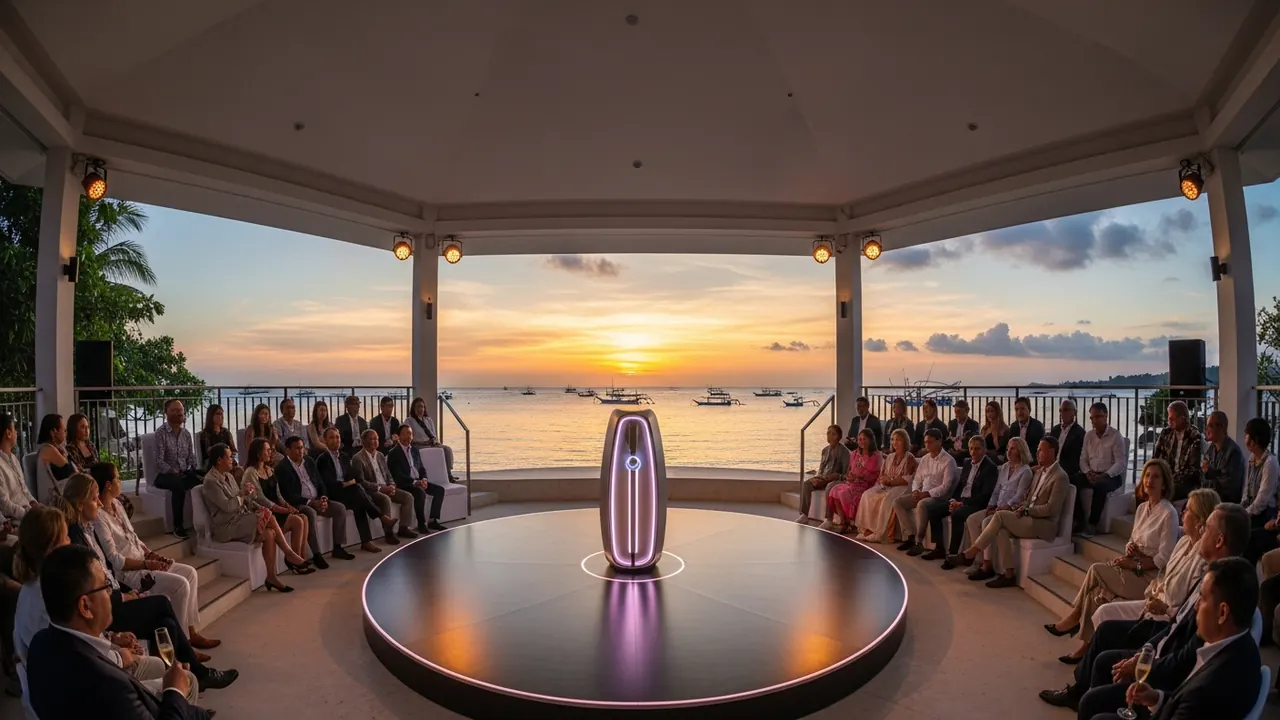
Beach clubs, cliff venues, and resort terraces in the Uluwatu, Jimbaran, and Seminyak belts offer a backdrop that travels — ocean, limestone, tropical landscape — and a visual story that no city venue can replicate. For a press launch where photography is the primary deliverable, a venue that generates its own visual interest reduces the production investment needed in décor and environmental design. The operational constraints are real: outdoor sound management, load-in windows, end-time enforcement, and weather risk all require planning. Headcount capacities at these venues are not independently verified by this guide — marketing figures circulate widely, and the only figures you should build a plan around are written specifications from the venue directly, confirmed against your specific event configuration.
Boutique hotel lobbies, private villas, and specialty cultural spaces suit smaller and higher-intimacy launch formats: a media preview for 20 to 40 journalists, a trade presentation for key distributor relationships, or a VIP brand experience for a narrow top-tier guest list. These settings photograph beautifully, can be controlled tightly, and allow a level of staging and guest handling that a large venue event cannot match. Catering licensing and outside-supplier access are the questions to verify early.
Weather risk in venue selection
Bali’s dry season runs roughly from April through October; the wet season runs roughly from November through March. Any outdoor element of a launch — a reveal moment on a cliff terrace, a product demonstration on a garden lawn, a media cocktail on a beach — needs a credible weather contingency plan, not a hope. In practice this means either a structural tent solution that is pre-contracted and fast to deploy, or an indoor fallback that is actually operational rather than theoretical. In the wet season, the fallback must be the plan A equivalent: if you cannot deliver the same brand experience indoors, do not plan an outdoor launch in the wet season without accepting significant risk.
Peak dry season — roughly June through September — is when venue availability and pricing for premium spaces tighten materially. If your launch date is driven by a product release calendar that falls in this window, lock the venue before you finalise media invitations.
Production, AV and Staging for Brand Launch Events
For a brand launch event in Bali, production is not a line item to scope after the venue is confirmed. It should be scoped in parallel, because the production requirement determines whether a given venue actually works.
The production stack for a launch event typically assembles from the following elements, each quoted separately:
- AV and technical production: LED wall or projection system for brand content and product reveal; sound design appropriate to the format (press launch acoustics are different from conference PA); lighting design for the presentation state and the photography state, which are often different settings; rigging where required for suspended elements; broadcast or livestream encoder if a simultaneous feed is going out. All are strictly by quote against your specific brief and headcount.
- Staging and set construction: the reveal stage or platform; the branded backdrop or hero wall; any structural elements that the product sits on, moves from, or is displayed within. If the product requires a custom-built display environment — a car on a turntable, a device in a backlit case, a fashion item suspended — this is fabrication, not standard staging, and the lead time is longer than most planners expect.
- Branded décor: florals, furniture, surface treatments, wayfinding, step-and-repeat, credentialling desk design. For a press launch, every surface in frame is brand real estate. Costs vary by an order of magnitude depending on the specification — they are genuinely by quote, not by rule of thumb.
- Photo and video production: if the brand is providing its own photo and video team rather than relying on credentialled media, they need briefed positions, lighting cooperation from the main production rig, and a clear protocol for when they can be in frame. If there is a videographer producing a hero reel for release, their requirements shape the lighting and staging brief from the start, not as an afterthought.
- Registration and credentialling infrastructure: for a press launch, this includes accreditation management, badge printing, media pack fulfilment, embargo briefing sign-off, and potentially a media-only check-in stream separate from the general guest flow.
None of these lines have fixed public pricing. Production costs for a launch event in Bali range widely based on scale, specification, and which suppliers are available and accredited for the venue. The correct approach is to brief a vetted production partner alongside — or before — your venue shortlist.
Ready to scope a brief? Reach the team on WhatsApp at +62 811 2859 0000 or via our enquiry form — we will route your brief to a vetted local partner with launch-event production experience.
MC, Talent and Foreign Performers: The Compliance Layer You Cannot Skip
A launch event’s MC, brand host, or keynote presenter is often confirmed late in the planning process, after venue and production are locked. That sequencing creates risk if any of those roles are filled by a foreign national who is being paid to appear.
Indonesia requires a licensed impresario — a locally registered promoter or event entity that holds the relevant licence — for foreign performers, entertainers, and (in practice, certain categories of) paid foreign speakers and brand ambassadors. The work-permit notification process, once an impresario is engaged, typically requires approximately one month of lead time at minimum. Tourist visas are not a legal basis for any paid performing, presenting, or speaking role. This applies to a foreign MC presenting your launch, a foreign DJ performing at the post-launch reception, a foreign brand ambassador hosting the reveal moment, and a foreign celebrity talent making a paid appearance at the event.
The permit process is manageable, but it must be initiated as soon as talent is confirmed — not two weeks before the event. A vetted local DMC partner with experience in event production will handle the impresario and permit process as a standard service. What they cannot do is run the process in three days. Build the lead time into your planning calendar from the moment you shortlist foreign talent.
The permits and visas framework is covered in more detail on our permits and delegate visas page. Verify current requirements with a licensed local partner before contracting any foreign talent; the specifics of the notification process are subject to change.
F&B for Launch Events: What to Brief Separately
Catering at a product launch sits differently from conference F&B. The food and beverage service is part of the brand experience, not a hospitality obligation to be minimised. For a press launch, the post-reveal reception is often where journalists and guests form their final impression of the brand’s ambition — the quality of catering, the calibration of the drinks, and the care in the presentation are read as brand signals by the room.
The practical questions for your brief:
- Does the venue allow outside catering, partial outside catering, or mandate in-house only? This is non-negotiable to establish before signing. Some venues allow speciality stations — a local food concept, a custom dessert experience — as external elements while requiring in-house for the core service.
- Is the catering designed to be photographed? For a launch where the post-event media coverage will include food and drinks photography, the catering brief should be coordinated with the brand’s creative brief, not treated as a venue default.
- What is the alcohol licensing status of the venue for a private corporate event? Indonesia’s licensing framework for alcohol service at private events at hotel venues and licensed beach clubs differs from what may apply at a private villa or off-venue location. Verify rather than assume.
Catering costs are strictly by quote: per-head F&B at a press launch varies substantially with menu complexity, service style, alcohol inclusion, and the brand-experience design requirements. This guide does not publish per-head benchmarks because they would be misleading without context.
Import of Marketing Materials, Samples and Freight: Know the Variables
If your launch involves shipping marketing materials, product samples, display units, branded merchandise, or technical equipment into Bali from overseas, customs and tax considerations apply. Indonesia has a customs framework that treats commercial goods, samples, and temporary-import equipment differently, and the classification of your shipment determines the applicable duty and tax treatment — or eligibility for temporary import relief for items re-exported after the event.
This is an area where advance planning with a licensed customs broker or freight forwarder with Indonesia experience is strongly recommended. The variables include: the commercial value and HS code classification of the items; whether they are intended for distribution, retention, or re-export; the quantity and whether it constitutes a commercial shipment under Indonesian import thresholds; and whether any specific permits apply to the product category (technology, food and beverage samples, regulated goods).
This guide presents customs and import as a topic to verify — not as advice. Every shipment is fact-specific, Indonesian customs practice evolves, and the correct guidance for your specific items must come from a licensed broker with current knowledge, not from a planning guide. Build the customs and logistics timeline into your launch planning from the moment international freight is in scope. Attempting to clear a shipment at short notice, or without the right documentation, is a common and avoidable cause of launch-day supply failures.
Roadshow Format: Multi-Venue Execution in Bali
A bali corporate roadshow — where the same brand team presents across multiple venues, cities, or audience segments within the island — introduces a logistics layer that a single-event launch does not have. The production challenge is replication: the brand environment, the staging, and the quality of execution must be consistent across stops, even when the venues themselves differ in size, layout, and infrastructure.
For a multi-venue roadshow within Bali, the practical considerations are:
- Transport of production materials between venues: staging, AV equipment, branded décor, and product display units need to move between locations on a schedule that allows full setup and testing at the next venue before the programme starts. In Bali’s traffic conditions — particularly during peak dry season in the south of the island — transfer times between venues are not reliably predictable. The logistics plan needs buffer time built in, not optimistic assumptions.
- Venue-by-venue technical assessment: each venue on the roadshow circuit needs its own production suitability check. A rigging point that exists at venue one may not exist at venue two. Power supply specifications differ. The load-in bay at the hotel ballroom may be absent at the beach club. A technical recce at each venue before the production specification is finalised is not optional for a roadshow.
- Consistent guest-list management across stops: if different audience segments attend each stop — press at one venue, trade buyers at another, consumer influencers at a third — the credentialling and guest management system needs to track across all stops, not be rebuilt for each.
- Permit requirements per location: each venue and each regency may have different permit requirements. What is covered by a hotel’s standing permits in Nusa Dua may not transfer to a beach club in Badung or a standalone space in Ubud. Your DMC partner needs to assess permits venue by venue, not assume consistency.
Cost Framework: What Launch Events Actually Cost in Bali
There is no reliable per-head or per-event benchmark for product launch events in Bali that would be honest to publish. The budget assembles from too many independent variables for a generic number to be useful. What follows is a cost structure map — the categories that appear in every launch budget, so you can ensure no line is missing from your supplier proposals.
| Budget line | Notes for your brief | Pricing basis |
|---|---|---|
| Venue hire or buyout | Varies sharply by venue type, date, and exclusivity requirement. Day rate vs multi-day. Minimum F&B spend clauses common at beach clubs. | By quote — venue-specific |
| AV and technical production | LED wall, sound, lighting, rigging, broadcast encoder if livestream. Production for a launch differs from conference AV in lighting design requirements. | By quote — spec-dependent |
| Staging and set construction | Reveal stage, branded backdrop, product display structure, any custom fabrication. Lead time for custom builds: typically 2–4 weeks minimum. | By quote — design-dependent |
| Branded décor | Florals, furniture, surface treatments, step-and-repeat, wayfinding. Wide range by specification — order-of-magnitude variation possible. | By quote |
| Photo and video production | Brand’s own crew, or credentialled-media model. If brand-owned production, includes crew, equipment, post-production scope. | By quote |
| F&B — catering and drinks | Per-head varies with menu, service style, alcohol. Outside caterer vs in-house depends on venue policy. | By quote — per head |
| MC or host | Local talent vs foreign: local is simpler; foreign requires impresario licence + work-permit notification (~1 month lead time minimum). | By quote — talent-specific |
| Entertainment (post-launch reception) | DJ, live band, cultural performance. Same foreign-talent permit rules apply to performers as to MC/host. | By quote |
| Guest transport | Airport transfers for media guests; shuttle from hotel to venue; multi-stop roadshow transfers. Ngurah Rai to Nusa Dua ~20–30 min under normal conditions. | By quote — route and count |
| Event staffing | Registration desk, front-of-house, media liaison, on-site brand ambassadors, floor managers. | By quote — headcount and hours |
| Freight and customs | Logistics for imported materials, samples, display units. Customs broker fees, potential duties — fact-specific, must be verified with a licensed broker. | By quote — shipment-specific |
| Permits | Event, sound, police clearance where required. Venue-dependent. Foreign-talent permit costs roll up to the impresario contract. | By quote — venue and scope specific |
All figures in this table are strictly by quote. No fixed prices exist for any of these categories across Bali’s event market. This guide does not publish cost benchmarks because they would be misleading outside of a specific brief and supplier context.
What to Ask a Supplier Before Signing
The questions that separate a prepared buyer from one who discovers surprises mid-production:
- What is the hard end-time at this venue, and is it negotiable in writing before contract signature?
- Is there an AV exclusivity clause, and does it prevent us from bringing our own production company?
- What is the load-in window — and is the room available from the start of that window, or does a prior event share the schedule?
- Does the venue have structural rigging points, and what is the rated load? Can we confirm this with a venue engineer rather than the sales team?
- What is the venue’s standing position on outside catering? Which elements can we bring in externally?
- Is the venue’s existing permit coverage sufficient for our event format, headcount, and sound requirements — or do we need separate event permits?
- If any of our talent or MC is a foreign national, who will own the impresario engagement and work-permit notification, and what is the latest date to initiate this?
- What is the payment schedule, and what are the force-majeure and cancellation terms?
A supplier who cannot answer these questions clearly before signing is not a supplier you want discovering the answers on your event day.
Working With a Vetted Partner for Your Launch
Bali DMC Agency is an independent editorial guide. We do not produce events, source venues, manage talent, or operate launches ourselves. When you are ready to execute, we introduce you to one vetted local partner with demonstrated experience in brand launch events and corporate roadshows in Bali — and we disclose that referral relationship openly. No one can pay to change what we publish; if you use our free guidance and proceed with a partner, they may pay us a referral fee at no extra cost to you.
To scope a launch brief, contact us on WhatsApp at +62 811 2859 0000 or write to [email protected]. Give us the event type, approximate guest count, target dates, product category, and whether any foreign talent is in scope — and we will route your brief to the right partner.
Everything on this page is general information, not legal, tax, customs, immigration, or professional event-planning advice. Permit requirements, customs classifications, and talent-permit processes change — verify current details with primary sources and licensed local professionals before committing budget or contracting talent.
Frequently Asked Questions
What makes bali product launch events different from a standard corporate conference?
The primary difference is the audience and the deliverable. A corporate conference serves internal or professional delegates and the deliverable is information transfer and decision-making. A product launch serves external guests — press, trade buyers, distributors, consumers — and the deliverable is coverage, footage, and brand impression. This changes venue selection (visual compatibility with the brand, not just capacity), production scope (lighting and staging designed for photography and media, not just presenter visibility), and logistics (media credentialling, embargo management, product security, demo handling). The guest-list management discipline is also more granular: different audience segments may need different handling streams, different information access, and different timing within the programme.
Do I need a special permit for a press launch venue bali?
Permit requirements depend on the venue, the scale of the event, the sound requirements, and whether any foreign talent is appearing. Private indoor events at licensed hotel venues are generally handled under the venue’s existing permits. Larger outdoor events, or events using amplified sound at venues that do not have a standing noise permit covering private buyouts, may require separate police clearance, banjar (village council) consent, and a noise management plan. There is no published numeric threshold — the trigger point is practice-based and varies by regency and venue. A licensed local DMC partner can assess your specific event. For foreign talent, the impresario licence and work-permit notification process applies regardless of venue type — see the permits and delegate visas page for the framework.
How much lead time does a brand launch event bali require?
Minimum realistic planning lead time for a modest press launch at an existing hotel venue with local talent is around 6 to 8 weeks, assuming no complex production or customs freight is involved. For an event with custom-built staging or set fabrication, add 2 to 4 weeks for fabrication lead time alone. If foreign talent is in scope — an international MC, a celebrity brand ambassador, a foreign band — the impresario and work-permit notification process typically needs approximately one month of lead time from the point a local impresario is engaged, which must happen early in the talent-contracting process. If marketing materials or product samples are being imported, customs clearance timelines depend on the shipment type and classification; build this in before you set a launch date. For a bali corporate roadshow with multiple venues, allow additional time for the technical recce at each venue and the permit assessment per location.
Can I import product samples and display units to Bali for a launch event?
Yes, but the customs treatment depends on the nature of the goods, their commercial value and HS classification, the quantity, and whether they are intended for distribution or re-export after the event. Indonesia’s customs framework has provisions for temporary importation of certain goods re-exported after use, but the eligibility conditions are specific and the documentation requirements are real. Items entering in larger quantities, or of significant commercial value, may be assessed as commercial imports with applicable duties and taxes. Some product categories — technology, food and beverage, regulated goods — may require additional permits. This is a logistics question to answer with a licensed customs broker with current Indonesia experience, not a general planning guide. Do not leave customs arrangements to the week before the launch.
Is foreign talent — an international MC or DJ — commonly used at Bali product launches?
Yes, international talent appears at Bali product launches and brand events. The compliance requirement is a licensed impresario and a work-permit notification process with approximately one month of lead time. A tourist visa is not a legal basis for a paid performing, presenting or speaking role. The process is manageable when planned for in advance and handled by a vetted local DMC with experience in international event production. The risk is entirely in the sequencing: talent confirmed late, impresario engaged too close to the event date, and the permit process either cannot complete in time or is bypassed — both outcomes create problems. Build the permit timeline into the planning schedule from the moment a foreign talent option is seriously on the table. Verify current requirements with a licensed local partner as permit processes are subject to change.