

How to use this page: Bali DMC Agency is an independent buyer’s guide to Bali MICE — we are not a DMC, PCO, venue, or transport operator ourselves. A DMC manages on-the-ground logistics, venues, and transport; it is not the venue or the conference organiser. Capacities, group sizes, and budgets shown are indicative ranges flagged [VERIFY] (mid-2026) and must be confirmed in writing with the relevant supplier, venue, or broker before you commit — this is general information, not legal, tax, or procurement advice; confirm delegate visas and event permits with the appropriate authority or your notary as relevant. We may earn a referral commission when we connect you to a vetted partner, which never changes the price you are quoted.
A Bali incentive travel program is a structured, results-linked reward experience that a company uses to motivate a defined group — typically top-performing sales staff, channel partners or key accounts — by offering a shared destination experience they could not easily replicate on their own. The defining characteristic is that participation is earned, not given; the trip is the trophy. That distinction shapes every design decision, from how you set qualification thresholds to how you structure the program arc once delegates arrive.
Most pages you will find on this topic are written by DMCs or incentive houses with something to sell you. This one is not. Bali DMC Agency is an independent buyer guide — we earn our keep by routing qualified enquiries to a single vetted partner and disclosing that relationship openly. What follows is procurement-grade program design thinking, not a brochure.
Why Program Design Comes Before Destination
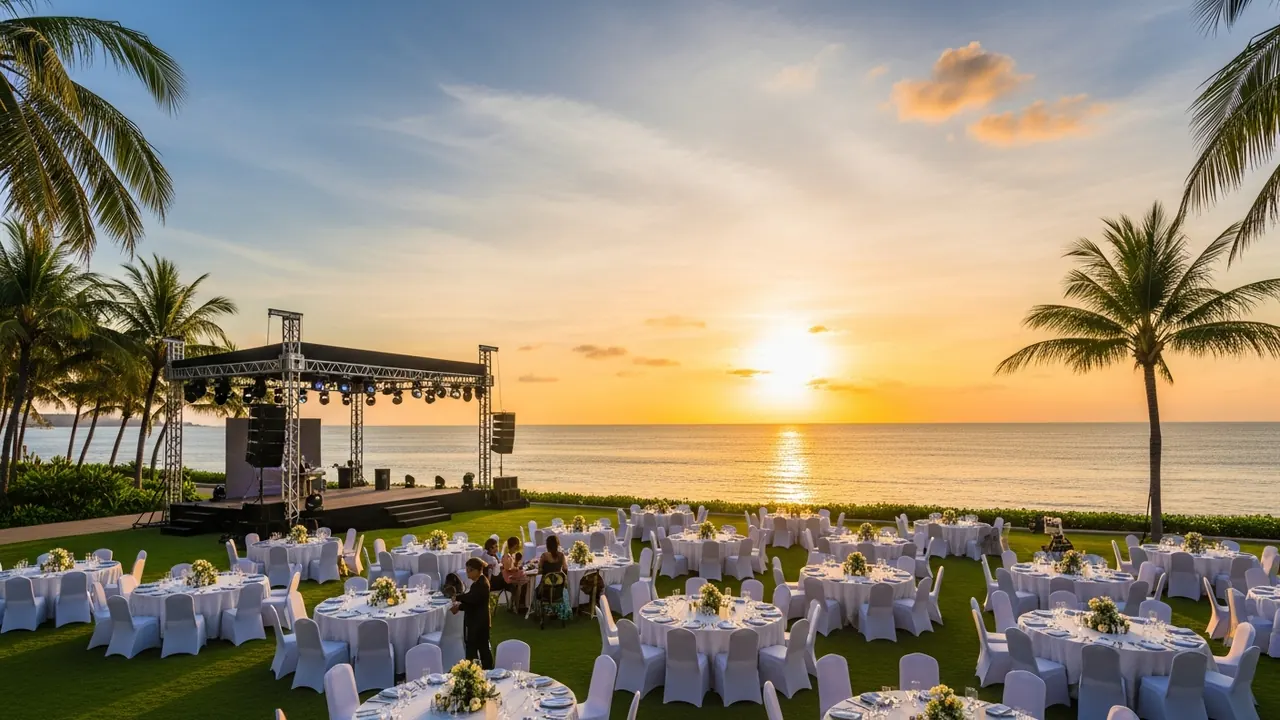
Planners under deadline pressure jump straight to hotel options and activity lists. That is the wrong order. The destination choice and every line item in the budget should follow from a clear answer to one question: what behaviour are we trying to change, and over what timeframe?
SITE — the Society for Incentive Travel Excellence — frames incentive travel around a causal chain: define the objective, set measurable qualification criteria, design the experience to reinforce the recognition, then measure the outcome against baseline. That is the framework regardless of destination. Bali becomes relevant when the experience density it offers maps well to your objective. It falls short when your primary need is convention-scale infrastructure or non-stop air lift from a distributed headcount spread across North America and Europe.
Define the Business Objective First
Typical incentive objectives fall into three categories. Revenue acceleration — hit a quota threshold, close a specific product category, grow a named account tier. Retention and loyalty — reward tenure, strengthen channel-partner relationships, reduce churn in a high-performer cohort. Culture and alignment — bring together a geographically dispersed team around a shared reference experience. Each objective requires a different program structure and a different success metric.
If you cannot write a two-sentence brief that connects the program to a business result, the budget approval conversation will be harder than it needs to be — and the post-trip ROI argument will be harder still.
Set Qualification Criteria That Feel Attainable
Reward psychology research is consistent on one point: stretch goals that feel genuinely achievable drive effort; goals that feel arbitrary or out of reach produce disengagement. The qualification bar should sit at a level where roughly the top 15 to 30 percent of your eligible population can realistically reach it in a normal performance year. Set it too low and the reward loses its value as a differentiator. Set it too high and the motivational pull disappears before Q2.
For mixed-nationality groups — common in regional sales organisations covering Southeast Asia — also think carefully about whether the qualification metrics are consistent across markets with different growth baselines. A rep in a mature market hitting 110 percent of quota and a rep in an emerging market hitting 130 percent may both deserve a seat on the program, depending on the growth context.
Bali's Honest Case as an Incentive Destination
Bali's appeal for incentive travel is real, and it is grounded in something specific: experience density. In a four- or five-night window you can credibly deliver cultural immersion (temple ceremonies, Balinese cooking, craft workshops), wellness programming (spa, yoga, sunrise treks), adventure team-building (white-water rafting, cycling, marine activities) and a high-production gala dinner at a clifftop venue — all without moving delegates between cities. That is genuinely hard to replicate in destinations where the convention facilities are strong but the experience palette outside the hotel is thin.
Bali also benefits from broad name recognition across Asia-Pacific markets. For a regional sales team covering Singapore, Hong Kong, Jakarta, Sydney and Tokyo, Bali reads as aspirational across most of those markets simultaneously — a meaningful advantage for pre-trip communications that are part of the motivational design.
Where Bali Falls Short — Be Honest With Your Stakeholders
No destination does everything equally well, and Bali has real constraints that a procurement lead needs to flag early.
Peak-season availability and pricing. Bali's dry season runs roughly April through October, and the concentrated demand during that window means that venue buyouts, premium beachfront properties and preferred F&B operators can book up considerably ahead of time. Availability and pricing can tighten materially in high-demand periods. If your program dates land in the July–August peak or around major public holidays, plan on a longer lead time and budget flexibility.
Air connectivity. Ngurah Rai International Airport (DPS) handled around 24 million passengers in 2024 — near its stated nominal capacity — with H1-2024 throughput confirmed by the airport as approximately 11.3 million passengers, up 16 percent on the prior year. That volume means the airport is busy, not that it is well-connected: non-stop lift from Europe and North America is limited. Groups originating from multiple continents will consolidate through a hub, most commonly Singapore, Kuala Lumpur or Jakarta. Factor connection layover time into your group arrival plan.
Over-tourism friction. Popular Bali precincts — Seminyak, Canggu, Ubud — attract heavy leisure traffic, and road congestion is a genuine operational risk. A group transfer from the airport to Nusa Dua is approximately 12 to 15 km, roughly 20 to 30 minutes via the Bali Mandara Toll under normal conditions (mapping-derived, approximate), but peak traffic extends this materially. Build buffer into your movement schedule.
Group size realities. The industry commonly cites Bali venues as accommodating around 20 to 1,500 delegates — this is single-source industry shorthand [VERIFY], not a guaranteed capacity across all program types. For incentive groups the operational sweet spot tends to be smaller cohorts where the personal-recognition element stays meaningful. A 400-person sales-force gathering is structurally different from a 40-person President's Club, and the program design, venue selection and per-pax cost model differ significantly between them.
Budget Tiers and Cost-Per-Delegate Modelling
Incentive program budgets are assembled from variable components, which is why any fixed price per head you see published is either out of date, stripped of half the line items, or both. The honest structure is a cost-per-delegate model built bottom-up from the program specification.
The components that drive most of the variance are:
- Venue and room block tier
- The gap between a well-run four-star resort and a five-star beachfront property is material, particularly for buyouts or preferred-rate room blocks. Season compounds the difference. All rates are by quote from the partner.
- F&B specification
- Catering costs vary widely by format — a working lunch, a cocktail reception and a full gala dinner are entirely different line items. Per-delegate catering is strictly by quote and depends on menu complexity, venue kitchen capability and whether alcohol is included in the delegate price or invoiced separately.
- Program activities
- A half-day Balinese cooking class for 40 delegates is a different cost exercise from a full-day white-water rafting and cultural tour for the same group. Activity costs depend on operator, group size, equipment, staffing and any exclusive-access fees. Present as ranges; confirm on quote.
- Gala dinner production
- Production — staging, AV, lighting design, decor, entertainment, theming — is typically the most elastic budget line. A minimal set-up and a fully produced themed event at the same venue can differ by a multiple. Scope this line explicitly in your RFP rather than letting it be bundled and hidden.
- Transfers and ground logistics
- Coach and vehicle hire, airport marshalling, on-site staffing and contingency transport scale with group size and movement complexity. By quote.
- DMC fee or margin
- Ask your partner whether they work on a disclosed percentage or cost-plus model — both are standard practice, and you should know which applies before comparing quotes.
- Permits and compliance
- Large outdoor events typically require location permits, police security and crowd clearance, noise and environmental approvals, and — in Bali — banjar or village-council consent. Private closed-door hotel events are usually handled by the venue or DMC. There is no published numeric threshold that maps headcount to a specific permit category; practice varies by regency. Treat permit costs as a line item to confirm, not an afterthought.
- Contingency
- Build in a contingency allowance — the percentage is yours to set based on program complexity and your risk tolerance. Production-heavy programs with outdoor elements in shoulder season warrant more buffer than a straightforward resort programme in a well-established dry-season window.
Ready to model your brief? Use our enquiry form or reach our team on WhatsApp at +62 811-2859-0000 and we will route you to a vetted partner who can provide itemised cost-per-delegate modelling for your specific specification.
Illustrative Program Structures — Not Fixed Packages
What follows are illustrative program arcs, presented to help you scope a brief. They are not packages with fixed prices or implied hotel endorsements. Every element is subject to availability, group size, season and your objectives.
Four-Night President's Club Format (Smaller Cohort)
This structure suits a high-recognition program for 30 to 80 qualifiers where the individual acknowledgement matters as much as the shared experience.
Night 1 — Arrival and Welcome. Dedicated meet-and-greet at DPS, group transfer to resort, poolside welcome reception. Light on logistics friction; generous on hospitality signal. The arrival experience sets the emotional register for everything that follows.
Day 2 — Business Session and Afternoon Free. A morning business session — the strategic review, the recognition ceremony, the message from leadership — followed by a structured free afternoon. Delegates use free time as they choose: spa, beach, independent exploration. This is deliberate: it signals trust, which is itself a form of recognition.
Day 3 — Off-Site Cultural Experience. A curated half-day activity — options frequently offered include Balinese cultural workshops, village visits, culinary experiences or guided nature excursions, though scope varies by operator. Afternoon free or optional wellness programming. Evening group dinner, more relaxed than the gala.
Day 4 — Gala Dinner. The programmatic centrepiece. Venue selection here drives the lasting memory — options range from estate lawns and clifftop settings to resort ballrooms, each with different production requirements and cost profiles. Theming, entertainment and production value matter; this is where the investment in design pays back in the post-trip narrative that travels back through your organisation.
Day 5 — Departure. Late checkout where possible; coordinated departure transfers.
Five-Night Regional Sales Program (Mid-Size Cohort)
This structure suits 100 to 300 delegates where the program has a stronger business-content component alongside the incentive reward.
Night 1 — Staggered Arrival. Groups arriving from multiple origin cities rarely land together. Plan staggered transfer windows rather than a single group arrival. Welcome dinner in a private resort space — not a grand event, a warm landing.
Day 2 — Plenary. Full-day business conference session: leadership keynotes, market-strategy review, product briefings. AV and production at conference standard. Evening free or optional group activity.
Day 3 — Team Activity and Recognition. Morning off-site team-building activity (by group rotation for larger headcounts — parallel tracks work better than one sequential experience for 200-plus). Afternoon awards and recognition session. Evening gala dinner.
Day 4 — Structured Free Day. Optional curated excursions — Ubud cultural half-day, spa retreat packages, adventure options — available for delegates to self-select. No mandatory schedule. This day often generates the most talked-about personal experiences.
Day 5 — Business Workshop and Departure Dinner. Smaller breakout sessions: account planning, product training, distributor workshops. Farewell dinner, informal.
Day 6 — Departure. Coordinated transfers; early-departure options for those with connection constraints.
Reward Psychology and the Design of Recognition
The practical planning detail can obscure the psychological mechanism that makes incentive travel effective. Cash equivalents — even generous ones — are quickly assimilated into the baseline expectation of compensation. A shared destination experience is remembered differently. It is social, it is narratable, and it carries visible status signalling that a bank transfer does not.
Three design principles follow from this:
The recognition moment must be public. Whether it is a leader presenting an award at the gala dinner or a group toast at the welcome reception, the acknowledgement of achievement needs an audience. Design the program arc to include a deliberate, unhurried recognition ritual — not a five-minute slide between keynote sessions.
The experience must feel exclusive. Qualifiers need to perceive that non-qualifiers missed something genuinely differentiated. This is partly about the destination — Bali carries that perception across most Asia-Pacific markets — and partly about program elements that cannot be replicated independently: venue buyouts, private cultural experiences, access to settings that are not available to general tourists on the same day.
Free time is not dead time. The unstructured hours — the afternoon at the pool, the solo walk through a rice terrace, the spontaneous beach dinner — often generate the most durable memories. Over-programming is a common mistake. A program that runs delegate activity from 7am to 10pm every day is exhausting, not rewarding. Build in genuine white space.
Mixed-Nationality Group Considerations
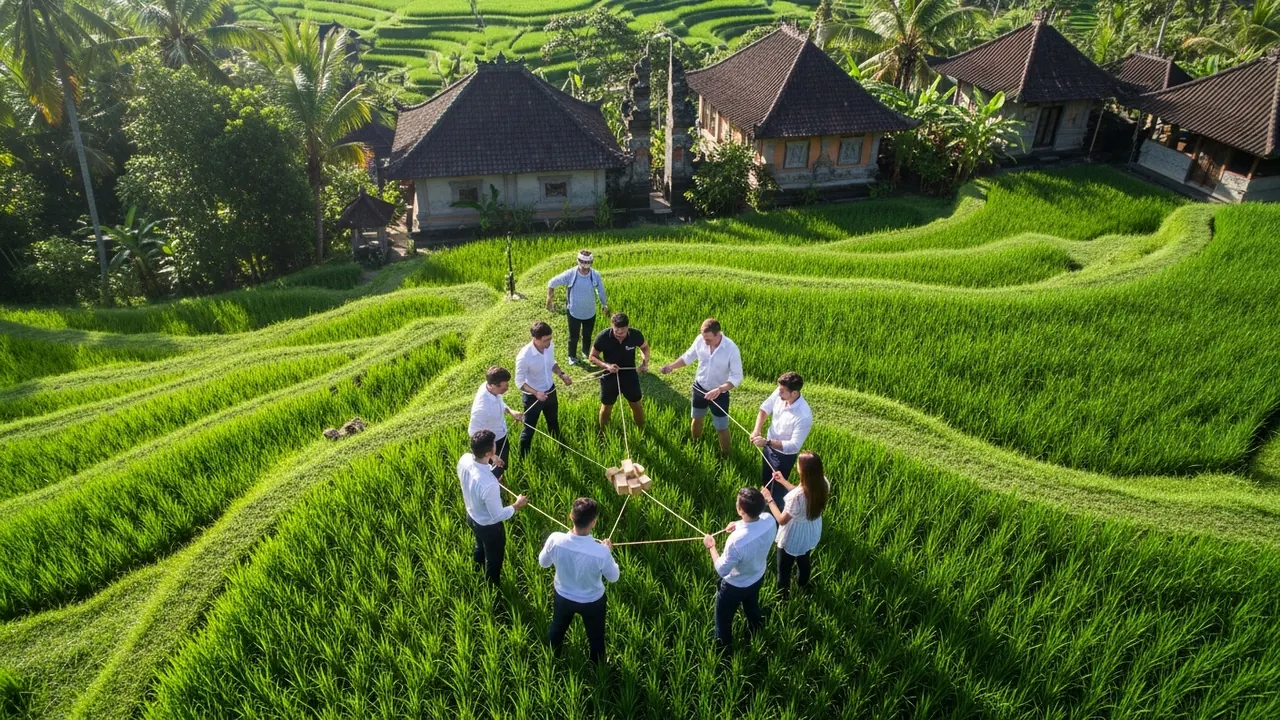
Regional programs covering markets across Asia-Pacific, and increasingly global programs that include Southeast Asia in the qualifier pool, bring a specific planning complexity that domestic programs do not face.
Visa and entry logistics. Indonesia's Visa on Arrival and e-VOA framework is commonly used by business visitors (typically up to 30 days, extendable once), but nationality lists, fees and conditions change frequently — treat any published table as a starting point for verification, not a definitive guide. Direct delegates and your HR team to the Indonesian Directorate General of Immigration for current rules. This is general information, not immigration advice; individual cases vary.
Dietary and cultural requirements. A regional cohort covering Singapore, Japan, India, Australia and Indonesia will have a wide range of dietary needs — halal, vegetarian, allergen — that need to be surfaced in the rooming list and pre-event survey, not discovered at the gala dinner. Bali's F&B operators are well-practised at catering for mixed requirements; the key is briefing them properly in advance.
Alcohol policy. Some delegate cohorts include participants for whom alcohol is not appropriate in a professional context. The program design and event format should be thoughtful about this — open bars at every function are not universally welcoming.
Language and cultural sensitivity. Balinese culture is rich and genuinely interesting to international delegates, but cultural experiences work best when they are framed with context rather than dropped into the schedule as a check-box. Brief your on-site team to narrate activities properly. Temple visits require appropriate dress and conduct — a briefing note in the pre-departure pack avoids awkward situations on the day.
Measuring ROI on an Incentive Program
Finance and HR departments increasingly require a return case before approving incentive travel budgets. The measurement framework is more straightforward than it appears if you set it up before the program launches, not after.
The simplest structure compares the performance of qualifiers in the qualification period against either their own prior-period baseline or a comparable non-qualifier cohort. If the program is designed correctly — qualification criteria set at the right stretch level, communicated early and consistently — you will see a measurable step-up in the qualifying cohort's performance during the qualification window, separate from any general market movement.
Secondary metrics worth tracking: retention rates among qualifiers in the 12 months post-program; post-program engagement scores if you run an employee or partner survey; and qualitative feedback on the recognition experience itself. The last of these is the most immediate and the easiest to collect — a brief post-trip survey of 10 questions takes under five minutes and generates the kind of direct quote that makes the internal budget conversation for the next program significantly easier.
Do not fabricate ROI projections or commit to a specific return multiple in your budget approval. The honest case is: controlled studies on incentive travel programs consistently find positive relationships between program participation and performance metrics, with SITE citing this as a well-established pattern in the incentive-travel research literature. Present a plausible ROI narrative grounded in your baseline data — not a guaranteed return — and your finance stakeholders will generally find that more credible than an optimistic headline multiple.
Sustainability and CSR Integration
RFPs from larger corporates increasingly require sustainability or CSR components as part of the incentive brief, driven by internal ESG commitments and delegate expectations. Bali offers genuinely credible options here — beach and reef restoration, community and artisan-support projects, local-sourcing commitments in F&B — but the quality and verifiability of what operators offer varies widely.
When briefing a CSR component, specify the outcome you want to measure (hours contributed, materials donated, community direct benefit) rather than accepting a generic responsible-tourism label. Ask the partner for evidence of the project — photos, beneficiary organisation name, prior program records. Note also that a trash-removal and environmental management plan is commonly required as part of event permitting for larger outdoor events in Bali; your DMC partner should handle this as standard, but confirm it is explicitly in scope.
Bali's single-use plastic restrictions provide useful context for F&B and event production briefs — confirm current regulations with your local partner, as the rules and enforcement vary and are not legal advice.
How This Guide Routes Your Enquiry
Bali DMC Agency is an independent editorial guide. We are not a DMC, PCO, venue or event operator, and we do not plan or staff events. When a reader is ready to move from scoping to execution, we route the enquiry to one vetted, accredited local partner. If you proceed with that partner, they may pay us a referral fee — we disclose this relationship openly, and it does not change what we publish or what we recommend. No one can pay to alter the content of this guide.
Everything on this page is general information, not legal, immigration, tax or professional event-planning advice. Visa rules, permit requirements and cost figures should all be verified with primary sources and qualified advisers before you commit budget.
To scope an incentive brief with our vetted partner, submit your brief via our enquiry form or reach the team directly on WhatsApp at +62 811-2859-0000 or by email at [email protected]. Include your approximate group size, target dates or season, program type and any compliance constraints — the more context you provide, the more useful the first conversation will be.
Frequently Asked Questions
What makes a Bali incentive trip different from a standard company retreat?
The defining difference is that incentive travel is earned, not given to all employees. Participation is the reward for a measurable performance outcome — a sales quota, a target hit, a defined achievement — which means the qualification process, the communication campaign and the recognition ceremony are as important as the destination experience itself. A company retreat is typically for a fixed group regardless of individual performance. The program design, the budget justification and the ROI framework are structurally different as a result.
How far in advance should we book a Bali incentive program?
For groups of 50 or more during Bali's dry season (broadly April through October), a lead time of nine to twelve months is a reasonable planning assumption for securing preferred room blocks and venue dates. Smaller groups in shoulder season can move faster, but preferred beachfront and clifftop venues that can be privately held fill quickly, particularly for peak-July and August programs. Availability and pricing can tighten materially in high-demand periods — the earlier the brief is placed, the more options a partner can bring to the table.
Can Bali handle a large incentive group of several hundred delegates?
Bali has a well-developed resort and event infrastructure across precincts including Nusa Dua, Seminyak, Uluwatu and Ubud. Group sizes commonly cited in the industry run from around 20 to 1,500 delegates — this is single-source industry shorthand [VERIFY], not a guaranteed capacity for every program type, and the practical ceiling depends on your specific program format, venues required and whether you need a single concentrated room block or can spread across properties. For programs above 200 delegates, the coordination complexity increases significantly and the brief to your DMC partner needs to be correspondingly detailed.
What is the typical cost per person for a Bali incentive program?
There is no single answer, because incentive program costs are assembled from a wide range of variable components — venue tier, room block grade, F&B specification, gala dinner production, activities, transfers and DMC fees. Published benchmark figures exist in the industry, but they are illustrative at best and should carry explicit [VERIFY] flags — your actual cost per delegate will depend on your specific program scope, group size and dates. The correct approach is to build a bottom-up cost model from an itemised quote against your brief, not to back into a program from a published headline number. Ask your partner to separate costs by component so you can see what drives the total.
Do delegates from all countries need a visa to attend an incentive program in Bali?
Indonesia's Visa on Arrival and e-VOA framework covers a significant number of nationalities, commonly allowing stays of up to 30 days extendable once, but nationality lists, fees and conditions change periodically and vary by passport. Some delegates may require a business visa (a B211A-type single-entry visa, often up to 60 days, requiring a sponsor) rather than a tourist-category entry, particularly if their role involves active work rather than passive conference attendance — that distinction is legally sensitive and case-by-case. This is general information, not immigration advice. Direct delegates to the Indonesian Directorate General of Immigration for current requirements applicable to their specific nationality and purpose of travel, and confirm current rules with a local DMC partner well ahead of visa-application deadlines.