How to use this page: Bali DMC Agency is an independent buyer’s guide to Bali MICE — we are not a DMC, PCO, venue, or transport operator ourselves. A DMC manages on-the-ground logistics, venues, and transport; it is not the venue or the conference organiser. Capacities, group sizes, and budgets shown are indicative ranges flagged [VERIFY] (mid-2026) and must be confirmed in writing with the relevant supplier, venue, or broker before you commit — this is general information, not legal, tax, or procurement advice; confirm delegate visas and event permits with the appropriate authority or your notary as relevant. We may earn a referral commission when we connect you to a vetted partner, which never changes the price you are quoted.
Information only — not legal, religious or professional advice. Cultural protocols and permit practices in Bali vary by location, banjar, regency and current circumstance. Everything here describes general practice as understood at publication. Verify specific requirements with a licensed local partner and relevant authorities before finalising any event plan near a temple, sacred site or cliff-edge venue.
Bali temple venue etiquette for events begins with a distinction that most vendor pitch decks skip entirely: not every site that photographs like a venue is actually available for one. Temples in Bali are active places of worship, not event backdrops, and their proximity to an event site carries specific obligations that neither a venue brochure nor a DMC sales call will typically lead with. The same applies to cliff venues along the Uluwatu–Jimbaran limestone coast — spectacular as outdoor settings, operationally demanding in ways that the marketing version of those same locations almost never mentions. This guide covers both categories with the candour that corporate buyers need before they brief a supplier.
Sacred Ground: What “Temple-Adjacent” Actually Means
Bali is home to an estimated 10,000 to 20,000 temples, a figure widely cited across Balinese cultural literature, though precise counts vary by source. The density is not decorative. Every banjar (the traditional village administrative unit) maintains its own temple complex; rice fields have their own shrines; cliff sites along the south coast often sit metres from active prayer spaces. The Pura Luhur Uluwatu complex at the tip of the Bukit Peninsula is the most internationally recognised example: a sixth-century sea temple set on a cliff face roughly 70 metres above the Indian Ocean, surrounded by a protected forest zone and monkeys that regard tourists with open contempt. It draws thousands of visitors daily and hosts the nightly Kecak fire dance in its outer forecourt — a performance that is itself a ritual offering, not a tourist show, though the line has blurred considerably over decades of cultural-tourism framing.
The distinction that matters for event planners: the outer forecourt of a temple complex, where cultural performances take place, is a different space from the inner sanctums where active prayer occurs. Most event-capable venues that sit near temples use only the outer or surrounding areas. But “near a temple” is not a binary status. On the Bukit Peninsula particularly, cliff-edge event venues and beach clubs sit within cultural landscapes where ceremony is an ongoing reality, not a scheduled occurrence.
What active ceremony means for your event
Balinese Hindu ceremonies occur on a calendar that does not pause for corporate schedules. Odalan (temple anniversary celebrations), Galungan, Kuningan, and a rotating sequence of local observances mean that your venue’s surroundings may be mid-ceremony on the day of your event. At some locations this is scenery; at others it is a practical constraint — a procession through the access road, a prayer amplification system that overrides your DJ, or an area of the site that is genuinely closed to non-Balinese visitors during the ceremony period.
There is no unified calendar a planner can consult to check all potential ceremony conflicts for a given date at a given location. The practical route is to ask your local partner specifically — not just “is the venue available?” but “are there any ceremonial observances on or near this site on our event dates?” A DMC with ongoing relationships in the area where you are operating knows this. A supplier quoting remotely from a brochure does not.
Dress and conduct: the baseline, not the ceiling
The baseline rules for temple proximity are widely documented: a sarong and sash (typically provided at the gate for visitors who arrive without them) are required to enter most temple compounds, and some inner sanctums are restricted to Balinese Hindus performing prayer regardless of what the visitor is wearing. Menstruating women are conventionally asked not to enter certain areas of active temple space — this is stated as a cultural practice, not a legal prohibition, and is presented here exactly as it should be presented to international corporate groups: as a local norm to be respected rather than a bureaucratic rule to be negotiated.
For events that are staged near but outside a temple compound, the conduct norms are less formalised but just as real in practice. Loud music and amplified speech during temple prayer hours — particularly evening prayer, which varies by location — can be both culturally disrespectful and, in some areas, the basis for a noise complaint to the banjar that affects your event permit. The line between “near a temple” and “in a way that disturbs a temple” depends on decibel levels, timing and local relationships.
Photography: the unwritten rules your guests will need
Photographing ceremonies at Balinese temples is not uniformly permitted or uniformly prohibited. In outer areas open to visitors, photography is common and generally tolerated. Inside active prayer areas, photography of worshippers without permission is intrusive and, at some sites, explicitly prohibited by posted signage. For corporate events where delegates carry cameras and phones as a reflex, this needs to be a briefing point, not an assumption. If your event takes place adjacent to a ceremony, designate someone — ideally a local staff member who speaks Balinese or Indonesian — to advise guests on what is and is not appropriate at that specific location on that specific day.
The Banjar: The Gate That Vendor Briefings Leave Out
Understanding banjar consent for Bali events is, in this editor’s view, the single most underexplained element of outdoor event planning on the island. The banjar is a traditional village governance unit — a community body that predates Indonesian national administration and retains meaningful authority over activities in its territory. Every neighbourhood in Bali belongs to a banjar. Outdoor events near temples, on community land, or in areas of cultural significance that fall within a banjar’s territory may require that banjar’s explicit consent as part of the event clearance process.
This is not a rubber-stamp formality. Banjar leaders make decisions based on the nature of the proposed event, its compatibility with local norms, and the relationship — or lack of one — between the organiser and the community. An international company sending a letter of intent through a translation service does not carry the same weight as a trusted local DMC whose team has worked in that area for years and has an established relationship with the banjar chair. The consent conversation is a genuine negotiation, and cultural fluency is not optional in it.
Regency also matters. Badung, Gianyar and Denpasar each have their own spatial planning and local regulation frameworks. An event in the Uluwatu area (Badung regency) follows different administrative pathways from one in Ubud (Gianyar). An experienced DMC who regularly operates in a specific regency knows which offices to approach, in what order, and what the timeline realistically looks like. A planner managing this from overseas, or through a supplier who operates mainly in a different area of the island, is navigating in the dark.
The practical upshot: banjar consent for events near culturally sensitive sites should be treated as a first-principles question to your local partner, not an afterthought once the venue contract is signed. Start that conversation early. If your partner has not mentioned it, ask directly: “Does this site require banjar consent, and how do you manage that relationship?” How they answer tells you something important about their operational experience.
Cliff Venues: What Makes Them Extraordinary Also Makes Them Hard
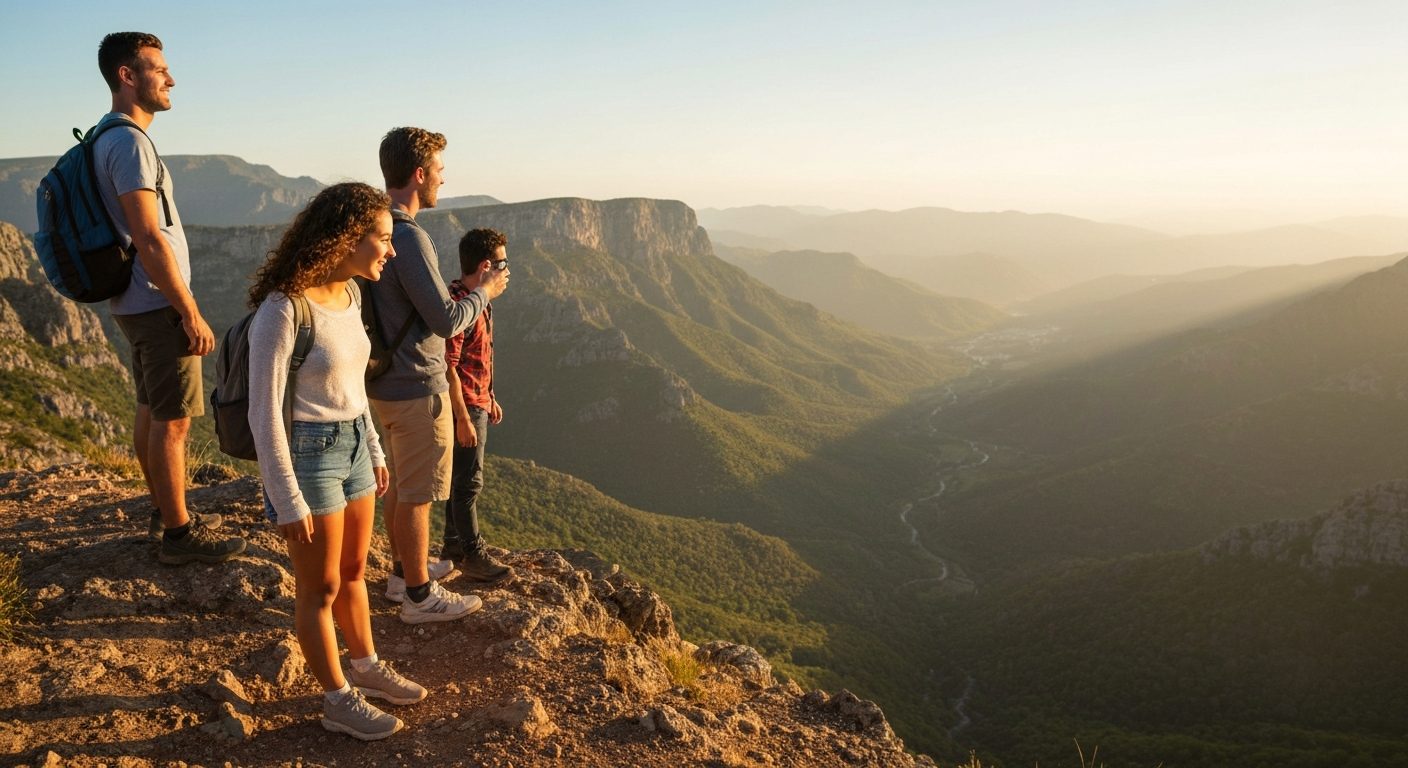
The limestone Bukit Peninsula — Jimbaran, Balangan, Bingin, Uluwatu — produces the cliff venues that appear in every aspirational Bali corporate event brief. The appeal is straightforward: a platform 30 to 80 metres above the Indian Ocean, a sunset that does not ask for a filter, and a delegate experience that no city ballroom can replicate. The operational realities are equally straightforward once you work through them, and a good partner will surface them unsolicited rather than waiting for you to ask.
Wind and weather exposure
Cliff tops on Bali’s south coast are exposed. The prevailing southerly winds that make the Indian Ocean swell consistent for surfing are the same winds that drive napkins off tables and make amplified speech difficult above a certain speed. Dry-season events from April to October carry lower rain risk, but evening gusts on the Bukit in July are real and should not surprise an experienced local production team — though they sometimes surprise foreign planners who booked on the basis of daytime site visits. A detailed wind assessment for your specific event dates and site, from a partner who has operated there, is a reasonable pre-contract request.
Tenting at cliff venues is possible. It is also complex, expensive, and structurally demanding — limestone platforms do not always allow the anchor points that a marquee engineer needs. If weather contingency requires a tented option, establish the structural feasibility and cost before signing the venue contract, not after.
Access and load-in
Getting production equipment to a cliff-top site is one of the less-discussed logistical challenges in Bali event planning. Access roads to cliff venues on the Bukit are typically narrow, steep in places, and not designed for production trucks carrying substantial rigging or furniture payloads. Some sites have service lifts or dedicated production access routes; others require manual carry from a staging area. Either way, the load-in window matters considerably more than it does at a hotel ballroom with dock access, and it needs to be confirmed in writing — not assumed from the venue’s verbal assurance that “it should be fine.”
Sound equipment for open-air cliff settings also needs to be specified differently from indoor event audio. Sound dissipates rapidly in open air, which means you need more of it to achieve the same intelligibility — and more amplified sound means more potential to exceed local noise thresholds. A production company experienced in cliff-venue events will design the audio system to these realities. One that is not may underspec the system or over-amplify and trigger a complaint.
Curfew and sound limits
Noise curfews at outdoor venues in Bali’s tourism belt are real, enforced, and vary by site. At cliff and beach venues on the Bukit, sound cut-off times are commonly in the 10 pm to 11 pm range — though this is not a published universal rule, it reflects what experienced operators report as common practice in Badung regency. The specific end-time for your event, at your venue, under the venue’s existing noise permits, must be confirmed before programme planning begins. Do not build a closing DJ set that assumes midnight permission.
Some cliff venues hold standing noise permits for their own bar and restaurant operations that do not automatically extend to private buyout events. A private buyout changes the nature of the event in the permit framework — it may require a separate notification or additional clearance. Confirm in writing that your buyout is covered by the venue’s existing approvals, or that your local partner is handling the additional clearance. Verbal assurances that “it has always been fine” are not a substitute for written confirmation.
| Factor | Cliff venues (Bukit Peninsula) | Temple-adjacent / cultural-park settings |
|---|---|---|
| Primary constraint | Wind exposure, load-in access, noise curfew | Banjar consent, ceremonial calendar, conduct protocols |
| Permit layer | Noise/sound clearance; police permit for large events (practice-based, no fixed numeric threshold) | Banjar consent; venue/land-use approval; regency-specific rules (Badung/Gianyar) |
| What vendors understate | Load-in complexity, tenting limitations, sound dissipation at elevation | Active ceremony conflicts, photography restrictions, timing sensitivity |
| Configuration note | Better for standing receptions than full plated-service dinner; seated dining needs additional production | Outer forecourt spaces event-capable; inner sanctums not available; GWK Lotus Pond up to 7,000 pax (multi-source, verify with venue for specific format) |
| Local partner essential? | Yes — for production access, sound design, noise-permit verification | Yes — for banjar relationship, ceremonial calendar check, cultural briefing |
This table describes general operational considerations, not universal rules. Requirements vary by site, regency and event specifics. Verify with a local partner before committing to a venue.
Cultural-Park Settings: A Different Category Entirely
Garuda Wisnu Kencana Cultural Park in Ungasan — roughly 10 to 15 minutes from Ngurah Rai International Airport, at approximately 263 metres above sea level, spread across around 60 hectares of karst plateau — is the large-format outdoor event setting most commonly cited for Bali MICE. The GWK statue, completed at approximately 121 metres (older marketing materials cite 150 metres, the planned figure, not the final), stands at the park’s summit and is a legitimate landmark backdrop.
The Lotus Pond is the park’s primary event space: an open-air limestone plaza with no permanent overhead cover, conventionally cited across multiple sources including Wikipedia and industry listings as capable of accommodating up to 7,000 people. The plaza area figure of approximately 4,400 square metres comes from a single source and should be verified directly with GWK for planning purposes. GWK’s own marketing material references considerably larger figures — these reflect festival standing-crowd scenarios, not seated dinner or conference configurations. The operative capacity for your specific format — seated gala, cocktail reception, hybrid — must be confirmed with the venue on your specific brief.
GWK is a functioning cultural park, not solely an event venue. It has its own visitor programmes, cultural performances, and operational schedule. Event load-in windows need early coordination with the park management, especially during periods when GWK’s own programming overlaps with early-evening event setups. End-time enforcement applies here as elsewhere. Production for a large-format event at the Lotus Pond — staging, power, sound, lighting, F&B logistics — is a significant separate cost that must be budgeted explicitly.
As a cultural-park setting rather than a temple compound, GWK does not carry the same active-worship constraints as a banjar temple. But it is a site of genuine cultural meaning, and events staged here should be planned with that in mind — not as a neutral outdoor plaza where anything goes. The park management has an interest in ensuring that events on their grounds reflect well on the site, and their approval process includes review of the event programme for compatibility with the park’s identity.
Ready to assess whether a cliff or cultural-park venue fits your event brief? Use our enquiry form or reach our team directly on WhatsApp at +62 811 2859 0000. Describe your headcount, preferred date and outdoor preference, and we will connect you with a vetted local partner who knows these venues on the ground.
What Good Ground-Handling Looks Like Here
Cultural and permit clearance for cliff and temple-adjacent venues is not a document process. It is a relationship process. The distinction matters because planners accustomed to European or North American event permitting — where a permit is an administrative outcome you can track through a portal — sometimes approach Bali the same way. The Balinese permit landscape does not always work that way, especially where banjar consent is involved.
What a well-connected local DMC brings to this process: established relationships with banjar leaders in the specific areas where they operate; knowledge of the ceremonial calendar for those areas; an understanding of which office, in what regency, handles the specific permits your event requires; and the cultural fluency to navigate a consent conversation in Indonesian or Balinese in a way that a foreign organiser cannot replicate. This is not something you can partially substitute with a well-prepared brief document translated into Indonesian. It is accumulated local standing, and it is genuinely valuable in this context.
The permits and visas page covers the broader permit framework in detail — the layered structure of location permits, police clearance, noise approval and banjar consent, and how they interact for large or outdoor events. This piece covers the cultural-etiquette layer that sits underneath the permit layer and shapes what is actually possible at a given site. Both need to be understood, and neither substitutes for the other.
Frequently Asked Questions
Can we use a Balinese temple as a backdrop for our corporate event?
Active temples are places of worship, not event venues, and should not be treated as backdrops regardless of how they photograph. Some temple compounds have outer forecourt areas — like the performance space at Pura Luhur Uluwatu — where cultural programmes take place, but these are not available for private corporate hire and are themselves spaces of religious significance. The correct category for events with cultural ambiance is a cultural-park setting such as Garuda Wisnu Kencana, where the park management provides event infrastructure and where the site is configured for event use. Always verify the nature and status of any site before using it as an event location, and do so through a local partner who understands the specific site’s protocols.
What is banjar consent for a Bali event, and do all outdoor events need it?
The banjar is Bali’s traditional village administrative unit, with genuine authority over activities in its territory. Banjar consent is required or strongly advisable for outdoor events on community land, near temples, or in areas of cultural significance within the banjar’s territory. Not all outdoor events trigger this requirement — a private hotel garden buyout within a licensed resort’s own grounds, for example, is generally handled by the resort. The threshold is determined by the site’s relationship to the local banjar, not by a published headcount rule. A local DMC with working relationships in the area where you plan to operate is the correct resource to assess whether your event requires banjar consent and to manage that conversation appropriately.
Are there photography rules at Bali event venues near temples?
Photography norms vary by site. In outer areas open to visitors, photography is generally tolerated but not unlimited. Inside active prayer areas, photographing worshippers is intrusive and at some sites explicitly prohibited. For a corporate event near a temple or cultural site, the safest approach is to brief delegates on the specific expectations for that location before arrival — not to assume that what applies at one Balinese site applies at another. Your local partner or on-site cultural guide is the right source for current and site-specific guidance, not a general rule that may not hold at your venue on your event date.
What are the realistic curfew times for cliff venue events in Bali?
Sound cut-off times at cliff and outdoor venues in Bali’s south coast vary by site and by the existing noise permits the venue holds. Experienced operators in Badung regency — which covers most of the Uluwatu–Jimbaran cliff corridor — commonly work to end-times in the range of 10 pm to 11 pm, though this is not a published universal standard. The specific end-time for your event must be confirmed in writing with the venue before programme planning begins, and confirmed separately that a private buyout is covered by the venue’s existing permissions. Do not assume that a venue’s regular operating hours apply to a private corporate event without written confirmation.
Do we need local cultural guidance for delegates attending events at Bali cliff or temple-adjacent venues?
Yes, particularly for sites that are near active temples or cultural ceremonies. International delegates arriving without prior briefing may not know that a sarong is required, that certain areas are restricted, or that photography of worshippers is not appropriate. This is not a complicated briefing — a one-page delegate guidance note covering dress code, photography norms, and conduct expectations near sacred spaces takes thirty minutes to prepare and removes a common friction point. Your local DMC should provide this as a standard part of event setup; if they do not, ask for it explicitly. It reflects well on the organiser and reduces the risk of cultural incidents that create operational problems on the day.
Reminder: This page is general information, not legal, permit, religious or professional advice. Bali’s permit practices, banjar processes, cultural norms and venue rules vary by location and change over time. Verify current requirements with a licensed local DMC, relevant authorities, and where appropriate an Indonesian legal adviser before finalising any event plan at a cliff or culturally sensitive venue. No one can pay to change what we publish; if you use our free guidance and proceed with a partner they may pay us a referral fee at no extra cost to you.